TrendManagerOpen2 seperate window
Download script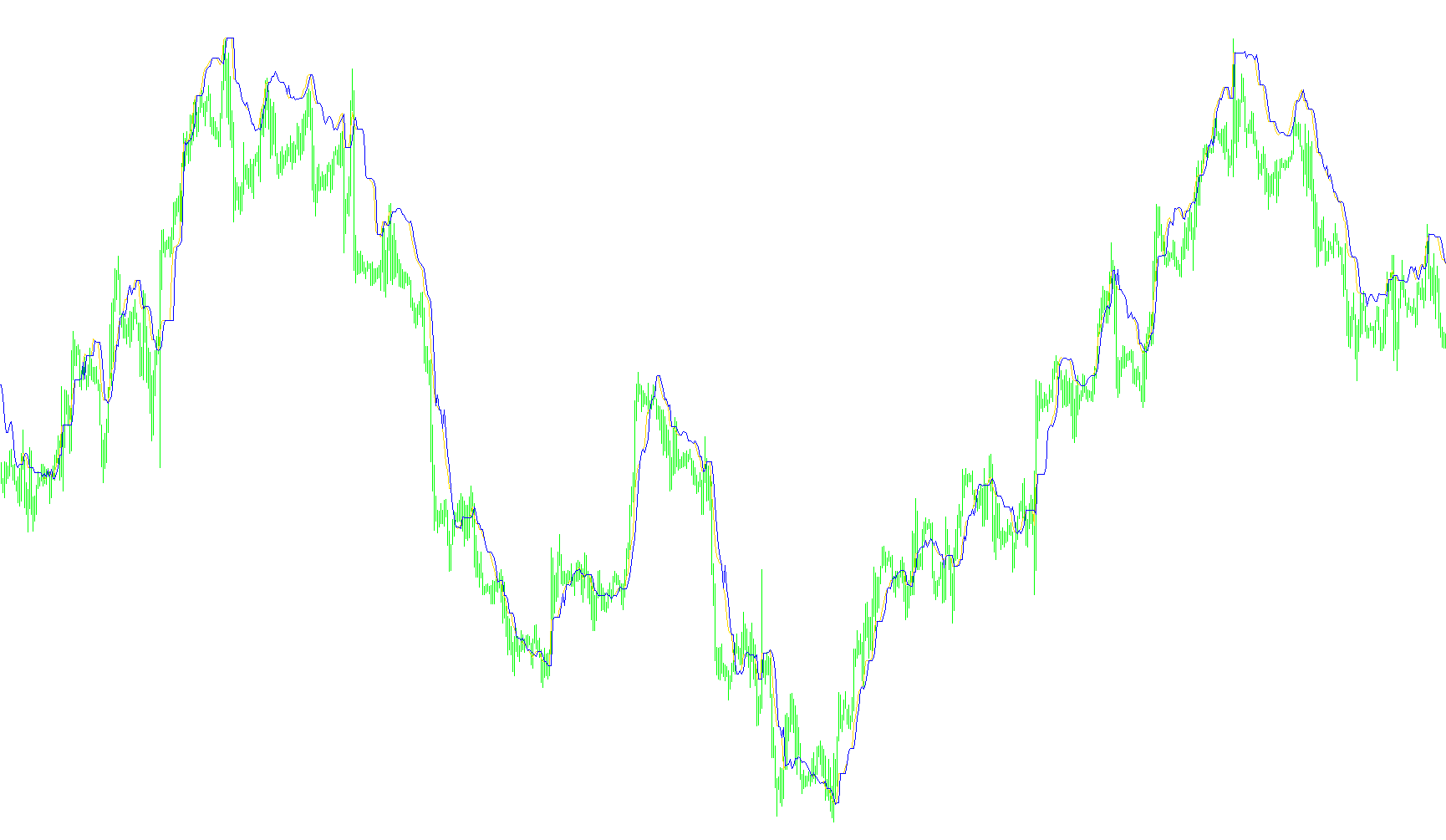
The Trend Manager Open2 is a technical analysis tool designed to help traders visualize market momentum by identifying the harmony between short-term and long-term price movements. Instead of just looking at where the price is currently, this script analyzes the "flow" of the market to determine if the trend is consistent or experiencing friction.
How the Logic Works
The tool operates by comparing two different sets of data simultaneously. It calculates a "Middle Price" for two distinct timeframes: a shorter period and a longer period. These periods are customizable, allowing users to adjust how sensitive the indicator is to sudden price swings versus broader market trends.
To determine the trend, the logic follows these steps:
1. Measuring Movement (The "Diff") The script looks at the change in price for both the short and long timeframes. It asks:
- Is the short-term price moving up or down compared to its previous position?
- Is the long-term price moving up or down compared to its previous position?
2. Identifying Harmony vs. Conflict The core logic relies on comparing these two movements. There are two primary scenarios the script identifies:
- Trend Agreement (Harmony): If both the short-term and long-term movements are moving in the same direction (both up or both down), the indicator reflects a cohesive trend. In this state, it displays two lines that represent the combined strength of these movements.
- Trend Conflict (Opposition): If the short-term movement is moving in the opposite direction of the long-term movement (for example, the price is dropping quickly while the overall trend is still climbing), the script detects a "conflict." When this happens, the indicator simplifies its visual output to show that the two forces are currently clashing.
3. Visual Representation The result is a visual representation on your chart that helps you see at a glance whether the current market action is supported by the broader trend or if it is a temporary deviation. By observing how these lines behave, traders can better identify high-probability entry points where the short-term momentum aligns with the long-term direction of the market.
// Trend Manager Open2.mq4
//
// Look & Feel based on indicator sold at traderstradingsystem.com
// No representation it is identical.
// This file is licensed under the terms of the GNU General Public License V2.
//
// (c) 2006 Matt Kennel (mbkennel@gmail.com)

#property indicator_separate_window
#property indicator_buffers 2
#property indicator_color1 Red
#property indicator_color2 Blue


extern int TM_Period_1 = 7;
extern int TM_Shift_1 = 2;
extern int TM_Period_2 = 13;
extern int TM_Shift_2 = 1;

int Max_Period;
int Max_Shift;

double SpanA_Buffer[];
double SpanB_Buffer[];
int a_begin;

int init()
{
   Max_Shift = MathMax(TM_Shift_1,TM_Shift_2);
   Max_Period = MathMax(TM_Period_1,TM_Period_2);

   int b_begin = Max_Period+Max_Shift-1;

   SetIndexStyle(1,DRAW_LINE,STYLE_SOLID);
   SetIndexBuffer(1,SpanB_Buffer);
   SetIndexDrawBegin(1,b_begin);
   SetIndexLabel(1,"TM_Period+");

   SetIndexStyle(0,DRAW_LINE,STYLE_SOLID);
   SetIndexBuffer(0,SpanA_Buffer);
   SetIndexDrawBegin(0,b_begin);
   SetIndexLabel(0,"TM_Period");

   return(0);
}

int start()
{
   int    i,k;
   int    counted_bars=IndicatorCounted();
   double high,low,price;

   if(Bars<=Max_Period) return(0);
   if(counted_bars<1)
   {
      for(i=1;i<=Max_Period;i++)
      {
         SpanA_Buffer[Bars-i]=0;
         SpanB_Buffer[Bars-i]=0;
      }
   }

   i=Bars-Max_Period;
   if(counted_bars>Max_Period) i=Bars-counted_bars-1;
   while(i>=0)
   {

      double M1, M1b;
      double M2, M2b;

      M1 = MiddlePrice(TM_Period_1,i);
      M1b = MiddlePrice(TM_Period_1,i+TM_Shift_1);
      M2 = MiddlePrice(TM_Period_2,i);
      M2b = MiddlePrice(TM_Period_2,i+TM_Shift_2);

      //
      double diff1 = (M1-M1b); // up or down on short term;
      double diff2 = (M2-M2b); // up or down on longer term.
      // each has three choices, hence six possibilities.


      if (diff1*diff2 <= 0.0) { // opposite signs
         SpanA_Buffer[i] = (M1+M2)*0.5;
         SpanB_Buffer[i] =  SpanA_Buffer[i]; //Blue bars
      } else {
         SpanA_Buffer[i]  =  (M1+M2)*0.5;
         SpanB_Buffer[i]  =  (M1b+M2b)*0.5;
      }
   //   Comment(SpanB_Buffer[i],"\n",SpanA_Buffer[i] );


      i--;
   }

   return(0);
}

double MiddlePrice(int nback, int shift) {
  double H = High[Highest(NULL,0,MODE_HIGH,nback,shift)];
  double L = Low[Lowest(NULL,0,MODE_LOW,nback,shift)];
  return( 0.5*(H+L));

}
Comments