VarMA_v1.1
Download script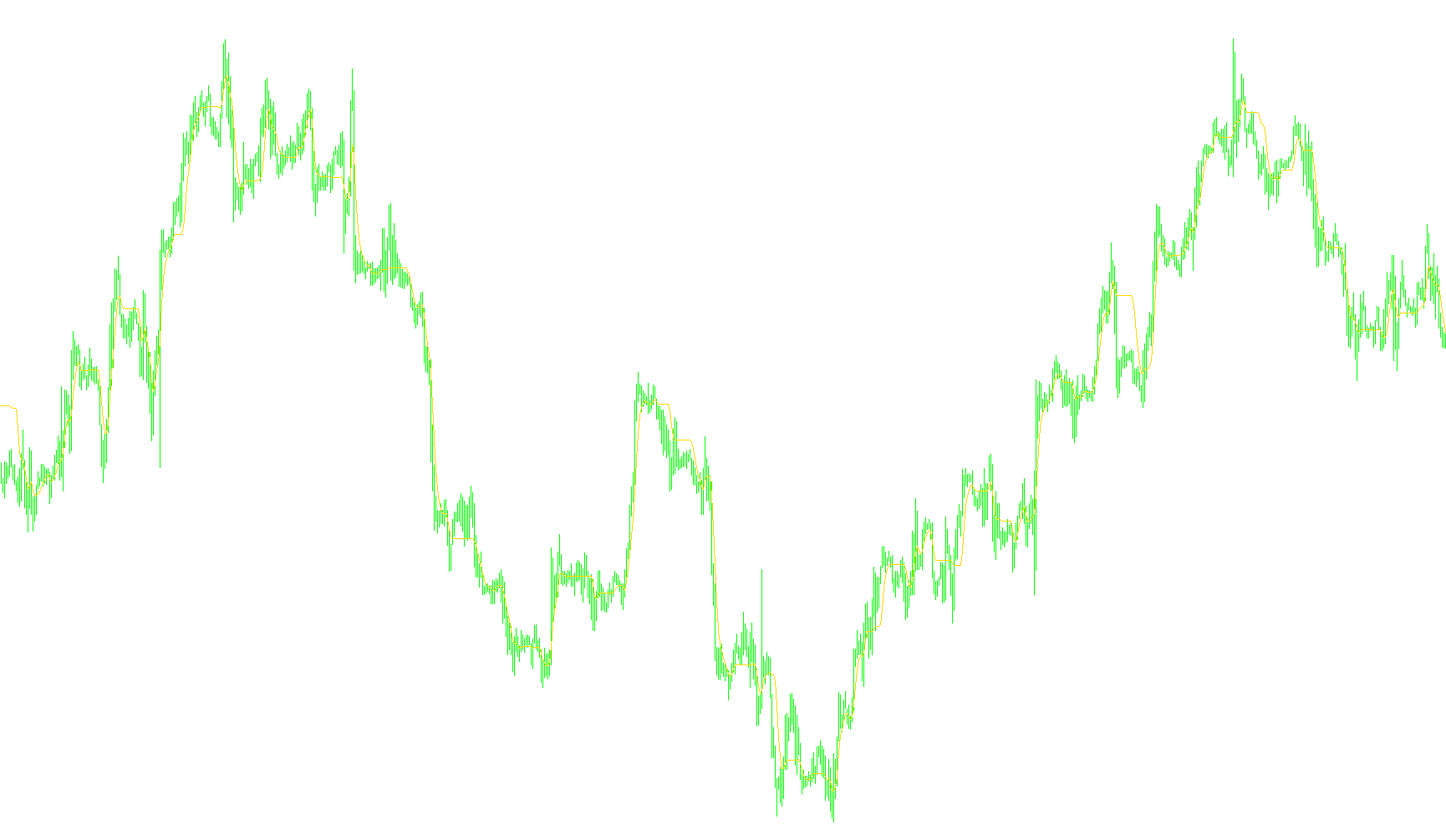
The VarMA (Variable Moving Average) is a sophisticated technical analysis tool designed to visualize price trends by dynamically adjusting its smoothness based on market volatility. Unlike standard moving averages, which apply a fixed weight to past prices regardless of market conditions, this script intelligently "speeds up" or "slows down" its calculation to react more effectively to current price action.
Core Logic and Mechanism
The indicator functions by analyzing three primary components: price movement, trend strength, and volatility. Here is the step-by-step breakdown of how it processes data:
1. Trend Strength Analysis (ADX Component) The script begins by calculating the Average Directional Index (ADX). This is a standard market tool used to determine whether a trend is strong or weak. It does this by comparing "Bullish" movements (price increases) against "Bearish" movements (price decreases) over a specific period.
2. Dynamic Weighting (The "Variable" Factor) This is the heart of the indicator. Instead of using a constant speed, the script looks at the range of trend strength values over a set window of time. It identifies the highest and lowest peaks of the trend strength to determine where the current price sits relative to that range:
- High Volatility/Strong Trend: If the current trend strength is high compared to its recent range, the indicator increases its "weight," allowing it to follow the price more closely.
- Low Volatility/Choppy Market: If the trend strength is low or flat, the indicator reduces its weight, smoothing out the line to prevent "whipsaws" (false signals caused by minor price fluctuations).
3. Recursive Smoothing The script uses a recursive calculation method. It takes the current price and blends it with the previous value of the moving average based on the "Variable Constant" calculated in the previous step. This ensures that the transition between a fast-reacting line and a smooth, slow line is fluid rather than jagged.
4. Final Averaging To provide an extra layer of stability, the script performs a secondary averaging process. It takes the results of the variable calculation and averages them with the previous values again. Finally, it applies a user-definable Moving Average (such as Simple, Exponential, or Weighted) to that result.
Summary for the User
In practical terms, this tool is designed to provide a "smart" moving average. In a trending market where prices are moving decisively in one direction, the line will lean toward the price to capture the momentum. In a sideways or "ranging" market where prices are fluctuating without a clear direction, the line becomes smoother and more conservative to filter out market noise.
//+------------------------------------------------------------------+
//|                                                     VarMA_v1.mq4 |
//|                                  Copyright © 2007, Forex-TSD.com |
//|                         Written by IgorAD,igorad2003@yahoo.co.uk |
//|            http://finance.groups.yahoo.com/group/TrendLaboratory |
//+------------------------------------------------------------------+
#property copyright "Copyright © 2007, Forex-TSD.com "
#property link      "http://www.forex-tsd.com/"

#property indicator_chart_window
#property indicator_buffers   1
#property indicator_color1    LightBlue
#property indicator_width1    2

//---- input parameters
extern int       MA_Length    =  1; // Period of MA
extern int       VarMA_Length =  4; // Period of VarMA
extern int       ADX_Length   =  8; // Period of ADX
extern int       ADX_Type     =  0; // ADX Type: 0-ADX,1-ADXR
extern int       MA_Mode      =  1; // MA's Mode: 0-SMA,1-EMA,2-SMMA,3-LWMA
//---- buffers
double MA[];
double VarMA[];
double VMA[];
double ADX[];
double ADXR[];
double sPDI[];
double sMDI[];
double STR[];


//+------------------------------------------------------------------+
//| Custom indicator initialization function                         |
//+------------------------------------------------------------------+
int init()
{
//---- indicators
   IndicatorBuffers(8);
   SetIndexStyle(0,DRAW_LINE);
   SetIndexBuffer(0,MA);
   SetIndexBuffer(1,VarMA);
   SetIndexBuffer(2,VMA);
   SetIndexBuffer(3,ADX);
   SetIndexBuffer(4,ADXR);
   SetIndexBuffer(5,sPDI);
   SetIndexBuffer(6,sMDI);
   SetIndexBuffer(7,STR);

   //---- name for DataWindow and indicator subwindow label
   string short_name="VarMA("+VarMA_Length+","+ADX_Length+","+ADX_Type+","+MA_Mode+")";
   IndicatorShortName(short_name);
   SetIndexLabel(0,"VarMA");

//----
   SetIndexDrawBegin(0,2*(MA_Length+ADX_Length+MA_Length));

   return(0);
}

//+------------------------------------------------------------------+
//| Custom indicator iteration function                              |
//+------------------------------------------------------------------+
int start()
  {
   int      shift, limit, counted_bars=IndicatorCounted();

   double alfa = 1.0/ADX_Length;
//----

   if ( counted_bars < 0 ) return(-1);
   if ( counted_bars ==0 ) limit=Bars-1;//limit=Bars-MA_Length-VarMA_Length-ADX_Length-1;
   if ( counted_bars < 1 )

   for(int i=1;i<2*(MA_Length+VarMA_Length+ADX_Length);i++)
   {
   VMA[Bars-i]=Close[Bars-i];
   VarMA[Bars-i]=Close[Bars-i];
   MA[Bars-i]=Close[Bars-i];
   STR[Bars-i] = High[Bars-i]-Low[Bars-i];
   sPDI[Bars-i] = 0;
   sMDI[Bars-i] = 0;
   ADX[Bars-i]=0;
   ADXR[Bars-i]=0;
   }

   if(counted_bars>0) limit=Bars-counted_bars;
   limit--;

   for( shift=limit; shift>=0; shift--)
   {
   double Hi  = High[shift];
   double Hi1 = High[shift+1];
   double Lo  = Low[shift];
   double Lo1 = Low[shift+1];
   double Close1= Close[shift+1];

   double Bulls = 0.5*(MathAbs(Hi-Hi1)+(Hi-Hi1));
   double Bears = 0.5*(MathAbs(Lo1-Lo)+(Lo1-Lo));

   if (Bulls > Bears) Bears = 0;
   else
   if (Bulls < Bears) Bulls = 0;
   else
   if (Bulls == Bears) {Bulls = 0;Bears = 0;}

   sPDI[shift] = sPDI[shift+1] + alfa * (Bulls - sPDI[shift+1]);
   sMDI[shift] = sMDI[shift+1] + alfa * (Bears - sMDI[shift+1]);

   double   TR = MathMax(Hi-Lo,Hi-Close1);
   STR[shift]  = STR[shift+1] + alfa * (TR - STR[shift+1]);

      if(STR[shift]>0 )
      {
      double PDI = 100*sPDI[shift]/STR[shift];
      double MDI = 100*sMDI[shift]/STR[shift];
      }

   if((PDI + MDI) > 0)
   double DX = 100*MathAbs(PDI - MDI)/(PDI + MDI);
   else DX = 0;

   ADX[shift] = ADX[shift+1] + alfa * (DX - ADX[shift+1]);

   ADXR[shift] = 0.5*(ADX[shift] + ADX[shift+ADX_Length]);

   if (ADX_Type == 0) double vADX = ADX[shift]; else vADX = ADXR[shift];

   if(VarMA_Length > 0) double MaInd = 2.0/(1.0+VarMA_Length); else MaInd = 0.2;

      double ADXmin = 1000000;
      for (i=0; i<=ADX_Length-1;i++)
      {
      if (ADX_Type == 0) ADXmin = MathMin(ADXmin,ADX[shift+i]);
      else ADXmin = MathMin(ADXmin,ADXR[shift+i]);
      }

      double ADXmax = -1;
      for (i=0; i<=ADX_Length-1;i++)
      {
      if (ADX_Type == 0) ADXmax = MathMax(ADXmax,ADX[shift+i]);
      else ADXmax = MathMax(ADXmax,ADXR[shift+i]);
      }

   double Diff = ADXmax - ADXmin;
   if(Diff > 0) double Const = (vADX- ADXmin)/Diff; else Const = MaInd;
   if(Const>MaInd) Const = MaInd; else Const = Const;

   VMA[shift] = (1 - Const) * VMA[shift+1] + Const *Close[shift];
   VarMA[shift] = (VMA[shift] + VMA[shift+1])/2;
   }

   for( shift=limit; shift>=0; shift--)
   MA[shift] = iMAOnArray(VarMA,0,MA_Length,0,MA_Mode,shift);
//----
   return(0);
  }
//+------------------------------------------------------------------+
Comments