ZigZag
Download script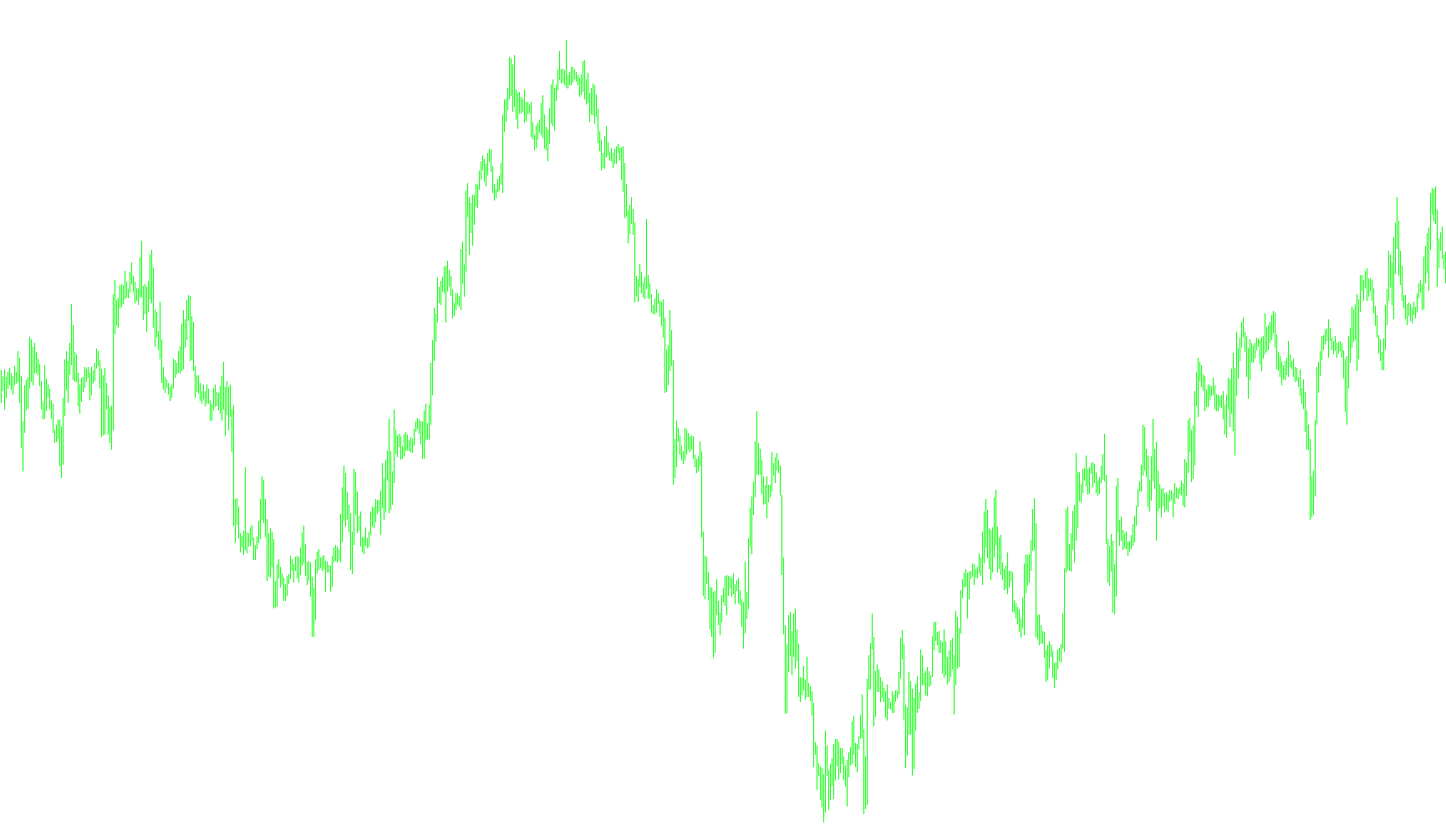
This script is designed to identify and visualize the primary structural "swing points" of a price chart, creating a simplified visual representation of market trends known as a ZigZag. Rather than showing every minor price fluctuation, it filters out "market noise" to highlight the significant peaks (highs) and valleys (lows).
Core Logic and Workflow
The tool operates by scanning historical price data and applying three main layers of logic to determine which points are worth drawing on your chart:
1. Filtering Noise via Depth and Deviation The script does not draw a line for every price movement. It uses specific user-defined parameters—Depth, Deviation, and Backstep—to act as filters.
- Depth & Deviation: These ensure that the tool only recognizes a new "swing" if the price moves significantly enough from its previous point. If the price movement is too small, the script ignores it, effectively smoothing out minor fluctuations.
- Backstep: This ensures that points are spaced out properly, preventing the tool from marking multiple peaks or valleys in a very tight, jagged area.
2. Identification of Extremes The logic continuously scans backward through price history to identify the highest highs and lowest lows within a specific window of time (the Depth). It compares these values against the "last known" peak or valley. If it finds a new price point that exceeds the previous one by a significant margin, it marks that point as a candidate for the ZigZag line.
3. The State Machine (Peak vs. Valley Tracking) To create a continuous, connected line rather than scattered dots, the script uses a "state" logic. It remembers whether it is currently looking for a high or a low:
- If the last confirmed point was a Low (Valley), the logic focuses on finding the next significant High (Peak).
- If the last confirmed point was a High (Peak), it focuses on finding the next significant Low (Valley).
4. Dynamic Updating and Correction A key feature of this logic is its ability to "re-draw" or correct itself. If the price continues to move higher than a recently identified peak (or lower than a recently identified valley) before the trend officially reverses, the script will move the ZigZag point forward to the new extreme. This ensures that the line always represents the true structural boundaries of the market trend.
Summary for the User
In simple terms, this script acts like a filter for your eyes. It ignores the small "zig-zags" of daily noise and draws a clean, continuous line connecting only the most important price turns. This helps traders identify the overall direction of the market, locate support and resistance levels, and see the underlying structure of the price action more clearly.
//+------------------------------------------------------------------+
//|                                                       Zigzag.mq4 |
//|                 Copyright © 2005-2007, MetaQuotes Software Corp. |
//|                                       http://www.metaquotes.net/ |
//+------------------------------------------------------------------+
#property copyright "Copyright © 2007, MetaQuotes Software Corp."
#property link      "http://www.metaquotes.net/"

#property indicator_chart_window
#property indicator_buffers 1
#property indicator_color1 Silver
#property indicator_width1 4
//---- indicator parameters
extern int ExtDepth=12;
extern int ExtDeviation=5;
extern int ExtBackstep=3;
//---- indicator buffers
double ZigzagBuffer[];
double HighMapBuffer[];
double LowMapBuffer[];
int level=3; // recounting's depth
bool downloadhistory=false;
//+------------------------------------------------------------------+
//| Custom indicator initialization function                         |
//+------------------------------------------------------------------+
int init()
  {
   IndicatorBuffers(3);
//---- drawing settings
   SetIndexStyle(0,DRAW_SECTION);
//---- indicator buffers mapping
   SetIndexBuffer(0,ZigzagBuffer);
   SetIndexBuffer(1,HighMapBuffer);
   SetIndexBuffer(2,LowMapBuffer);
   SetIndexEmptyValue(0,0.0);

//---- indicator short name
   IndicatorShortName("ZigZag("+ExtDepth+","+ExtDeviation+","+ExtBackstep+")");
//---- initialization done
   return(0);
  }
//+------------------------------------------------------------------+
//|                                                                  |
//+------------------------------------------------------------------+
int start()
  {
   int i, counted_bars = IndicatorCounted();
   int limit,counterZ,whatlookfor;
   int shift,back,lasthighpos,lastlowpos;
   double val,res;
   double curlow,curhigh,lasthigh,lastlow;

   if (counted_bars==0 && downloadhistory) // history was downloaded
     {
      ArrayInitialize(ZigzagBuffer,0.0);
      ArrayInitialize(HighMapBuffer,0.0);
      ArrayInitialize(LowMapBuffer,0.0);
     }
   if (counted_bars==0)
     {
      limit=Bars-ExtDepth;
      downloadhistory=true;
     }
   if (counted_bars>0)
     {
      while (counterZ<3 && i<100)
        {
         res=ZigzagBuffer[i];
         if (res!=0) counterZ++;
         i++;
        }
      i--;
      limit=i;
      if (LowMapBuffer[i]!=0)
        {
         curlow=LowMapBuffer[i];
         whatlookfor=1;
        }
      else
        {
         curhigh=HighMapBuffer[i];
         whatlookfor=-1;
        }
      for (i=limit-1;i>=0;i--)
        {
         ZigzagBuffer[i]=0.0;
         LowMapBuffer[i]=0.0;
         HighMapBuffer[i]=0.0;
        }
     }

   for(shift=limit; shift>=0; shift--)
     {
      val=Low[iLowest(NULL,0,MODE_LOW,ExtDepth,shift)];
      if(val==lastlow) val=0.0;
      else
        {
         lastlow=val;
         if((Low[shift]-val)>(ExtDeviation*Point)) val=0.0;
         else
           {
            for(back=1; back<=ExtBackstep; back++)
              {
               res=LowMapBuffer[shift+back];
               if((res!=0)&&(res>val)) LowMapBuffer[shift+back]=0.0;
              }
           }
        }
      if (Low[shift]==val) LowMapBuffer[shift]=val; else LowMapBuffer[shift]=0.0;
      //--- high
      val=High[iHighest(NULL,0,MODE_HIGH,ExtDepth,shift)];
      if(val==lasthigh) val=0.0;
      else
        {
         lasthigh=val;
         if((val-High[shift])>(ExtDeviation*Point)) val=0.0;
         else
           {
            for(back=1; back<=ExtBackstep; back++)
              {
               res=HighMapBuffer[shift+back];
               if((res!=0)&&(res<val)) HighMapBuffer[shift+back]=0.0;
              }
           }
        }
      if (High[shift]==val) HighMapBuffer[shift]=val; else HighMapBuffer[shift]=0.0;
     }

   // final cutting
   if (whatlookfor==0)
     {
      lastlow=0;
      lasthigh=0;
     }
   else
     {
      lastlow=curlow;
      lasthigh=curhigh;
     }
   for (shift=limit;shift>=0;shift--)
     {
      res=0.0;
      switch(whatlookfor)
        {
         case 0: // look for peak or lawn
            if (lastlow==0 && lasthigh==0)
              {
               if (HighMapBuffer[shift]!=0)
                 {
                  lasthigh=High[shift];
                  lasthighpos=shift;
                  whatlookfor=-1;
                  ZigzagBuffer[shift]=lasthigh;
                  res=1;
                 }
               if (LowMapBuffer[shift]!=0)
                 {
                  lastlow=Low[shift];
                  lastlowpos=shift;
                  whatlookfor=1;
                  ZigzagBuffer[shift]=lastlow;
                  res=1;
                 }
              }
             break;
         case 1: // look for peak
            if (LowMapBuffer[shift]!=0.0 && LowMapBuffer[shift]<lastlow && HighMapBuffer[shift]==0.0)
              {
               ZigzagBuffer[lastlowpos]=0.0;
               lastlowpos=shift;
               lastlow=LowMapBuffer[shift];
               ZigzagBuffer[shift]=lastlow;
               res=1;
              }
            if (HighMapBuffer[shift]!=0.0 && LowMapBuffer[shift]==0.0)
              {
               lasthigh=HighMapBuffer[shift];
               lasthighpos=shift;
               ZigzagBuffer[shift]=lasthigh;
               whatlookfor=-1;
               res=1;
              }
            break;
         case -1: // look for lawn
            if (HighMapBuffer[shift]!=0.0 && HighMapBuffer[shift]>lasthigh && LowMapBuffer[shift]==0.0)
              {
               ZigzagBuffer[lasthighpos]=0.0;
               lasthighpos=shift;
               lasthigh=HighMapBuffer[shift];
               ZigzagBuffer[shift]=lasthigh;
              }
            if (LowMapBuffer[shift]!=0.0 && HighMapBuffer[shift]==0.0)
              {
               lastlow=LowMapBuffer[shift];
               lastlowpos=shift;
               ZigzagBuffer[shift]=lastlow;
               whatlookfor=1;
              }
            break;
         default: return;
        }
     }

   return(0);
  }
//+------------------------------------------------------------------+
Comments