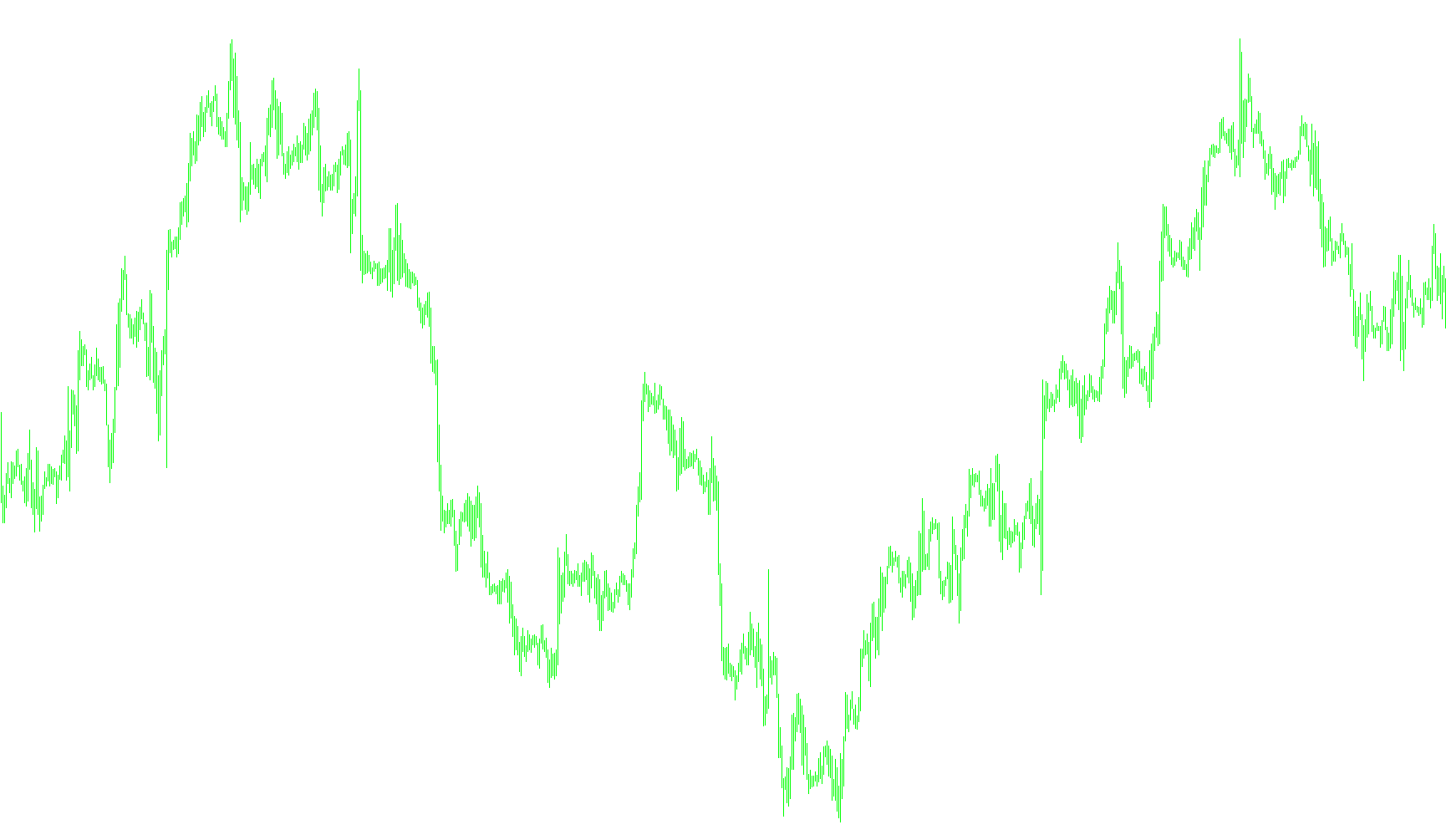
The StepChoppy indicator is designed to provide traders with a clear visual representation of current market momentum and trend health. Instead of showing complex mathematical figures, it translates price action into eight distinct categories, allowing users to quickly identify whether the market is moving strongly in one direction, retracing, becoming "choppy" (sideways), or preparing for a potential trend reversal.
How the Logic Works
The script functions by analyzing two primary types of data: Trend Direction and Relative Strength. By combining these, it classifies the market into specific "states."
1. Establishing the Trend Foundation
The logic first looks at moving averages (specifically a specialized "Step Moving Average") to determine the general direction of the price. This helps the script distinguish between an overall upward bias and an overall downward bias in the market.
2. Measuring Momentum and Velocity
To understand the "quality" of that trend, the script compares different speeds of Relative Strength Index (RSI) calculations. By looking at "Fast," "Slow," and "Standard" momentum values simultaneously, it can detect:
- Strength: Is the current move accelerating?
- Weakness: Is the move losing steam or stalling?
- Volatility: Is the price moving in a clear path or is it wandering aimlessly?
3. The Eight Market States
By cross-referencing the trend direction with these momentum speeds, the indicator produces eight unique signals visualized as histograms:
Bullish (Upward) Scenarios:
- Strong UpTrend: High-velocity momentum moving in the primary upward direction.
- Retrace UpTrend: The market is still trending up, but the immediate momentum has paused or dipped slightly.
- Choppy UpTrend: The trend is technically upward, but the price action is becoming disorganized and sideways.
- Be Ready to Change UpTrend: A warning signal indicating that upward momentum is exhausted and a reversal may be imminent.
Bearish (Downward) Scenarios:
- Strong DownTrend: High-velocity momentum moving firmly in the primary downward direction.
- Retrace DownTrend: The market is still trending down, but shows a temporary pause or "breather."
- Choppy DownTrend: The trend is technically downward, but price action is wandering without clear direction.
- Be Ready to Change DownTrend: A warning signal indicating that downward momentum is fading and a move back up may be starting.
Summary for the User
In essence, this tool acts as a "mood ring" for the market. It filters out the noise of raw price charts and tells you not just where the price is going, but how it is getting there—whether with power, hesitation, or exhaustion. This allows traders to stay in high-momentum moves while identifying early warning signs to exit before a trend loses its steam.
/*-----------------------------+
|			       |
| Shared by www.Aptrafx.com    |
|			       |
+------------------------------*/

//+------------------------------------------------------------------+
//|                                              StepChoppy_v1.3.mq4 |
//|                                  Copyright © 2006, Forex-TSD.com |
//|                         Written by IgorAD,igorad2003@yahoo.co.uk |
//|            http://finance.groups.yahoo.com/group/TrendLaboratory |
//+------------------------------------------------------------------+
#property copyright "Copyright © 2006, Forex-TSD.com "
#property link      "http://www.forex-tsd.com/"

#property indicator_separate_window
#property indicator_minimum -0.05
#property indicator_maximum 1.05
#property indicator_buffers 8

//---- input parameters
extern int     Length      =10;
extern double  Kv          = 1.0;
extern double  StepSize    =0;
extern int     MA_Mode     = 0;
extern bool    HighLow     = false;
extern double  StepSizeFast=5;
extern double  StepSizeSlow=15;
int MAPeriod=1;
int Price=0;
int Mode=2;
//---- buffers
double UpBuffer1[];
double UpBuffer2[];
double UpBuffer3[];
double UpBuffer4[];

double DnBuffer1[];
double DnBuffer2[];
double DnBuffer3[];
double DnBuffer4[];

//+------------------------------------------------------------------+
//| Custom indicator initialization function                         |
//+------------------------------------------------------------------+
int init()
  {

//----
   SetIndexStyle(0,DRAW_HISTOGRAM,0,3,MediumBlue);
   SetIndexStyle(1,DRAW_HISTOGRAM,0,3,DodgerBlue);
   SetIndexStyle(2,DRAW_HISTOGRAM,0,3,LightBlue);
   SetIndexStyle(3,DRAW_HISTOGRAM,0,3,Aqua);

   SetIndexStyle(4,DRAW_HISTOGRAM,0,3,Crimson);
   SetIndexStyle(5,DRAW_HISTOGRAM,0,3,Tomato);
   SetIndexStyle(6,DRAW_HISTOGRAM,0,3,Orange);
   SetIndexStyle(7,DRAW_HISTOGRAM,0,3,Yellow);

   SetIndexBuffer(0,UpBuffer1);
   SetIndexBuffer(1,UpBuffer2);
   SetIndexBuffer(2,UpBuffer3);
   SetIndexBuffer(3,UpBuffer4);

   SetIndexBuffer(4,DnBuffer1);
   SetIndexBuffer(5,DnBuffer2);
   SetIndexBuffer(6,DnBuffer3);
   SetIndexBuffer(7,DnBuffer4);

//----
   string short_name="StepChoppy";
   IndicatorShortName(short_name);
   SetIndexLabel(0,"Strong UpTrend");
   SetIndexLabel(1,"Retrace UpTrend");
   SetIndexLabel(2,"Choppy UpTrend");
   SetIndexLabel(3,"Be ready to change UpTrend");

   SetIndexLabel(4,"Strong DownTrend");
   SetIndexLabel(5,"Retrace DownTrend");
   SetIndexLabel(6,"Choppy DownTrend");
   SetIndexLabel(7,"Be ready to change DownTrend");
//----

   SetIndexDrawBegin(0,Length);
   SetIndexDrawBegin(1,Length);
   SetIndexDrawBegin(2,Length);
   SetIndexDrawBegin(3,Length);
   SetIndexDrawBegin(4,Length);
   SetIndexDrawBegin(5,Length);
   SetIndexDrawBegin(6,Length);
   SetIndexDrawBegin(7,Length);
//----
   return(0);
  }
//+------------------------------------------------------------------+
//| StepChoppy_v1.3                                                  |
//+------------------------------------------------------------------+
int start()
  {
   int  i,counted_bars=IndicatorCounted();
   double RSI, FastRSI, SlowRSI, StepMA, UpTrendMA, DnTrendMA;
//----
   if(Bars<=Length) return(0);
//---- initial zero
   if(counted_bars<1)
      for(i=1;i<=Length;i++)
      {
      UpBuffer1[Bars-i]=0.0;
      UpBuffer2[Bars-i]=0.0;
      UpBuffer3[Bars-i]=0.0;
      UpBuffer4[Bars-i]=0.0;

      DnBuffer1[Bars-i]=0.0;
      DnBuffer2[Bars-i]=0.0;
      DnBuffer3[Bars-i]=0.0;
      DnBuffer4[Bars-i]=0.0;
      }
//----
   if ( counted_bars > 0 )  int limit=Bars-counted_bars;
   if ( counted_bars ==0 )  limit=Bars-Length-1;

   for(i=limit;i>=0;i--)
   {

   UpTrendMA = iCustom(NULL,0,"StepMA_v7",Length,Kv,StepSize,MA_Mode,0,0,HighLow,2,0,1,i);
   DnTrendMA = iCustom(NULL,0,"StepMA_v7",Length,Kv,StepSize,MA_Mode,0,0,HighLow,2,0,2,i);

   RSI=iCustom(NULL,0,"StepRSI_v5.2",Length,StepSizeFast,MAPeriod,Price,Mode,0,i);
   FastRSI=iCustom(NULL,0,"StepRSI_v5.2",Length,StepSizeFast,MAPeriod,Price,Mode,1,i);
   SlowRSI=iCustom(NULL,0,"StepRSI_v5.2",Length,StepSizeSlow,MAPeriod,Price,Mode,1,i);

   UpBuffer1[i] =UpBuffer1[i+1];
   UpBuffer2[i] =UpBuffer2[i+1];
   UpBuffer3[i] =UpBuffer3[i+1];
   UpBuffer4[i] =UpBuffer4[i+1];

   DnBuffer1[i] =DnBuffer1[i+1];
   DnBuffer2[i] =DnBuffer2[i+1];
   DnBuffer3[i] =DnBuffer3[i+1];
   DnBuffer4[i] =DnBuffer4[i+1];

   if (FastRSI > SlowRSI && RSI > FastRSI && UpTrendMA!=EMPTY_VALUE)
   {UpBuffer1[i] = 1.0;UpBuffer2[i] = 0.0;UpBuffer3[i] = 0.0;UpBuffer4[i] = 0.0;
    DnBuffer1[i] = 0.0;DnBuffer2[i] = 0.0;DnBuffer3[i] = 0.0;DnBuffer4[i] = 0.0;}

   else if (FastRSI > SlowRSI && RSI < FastRSI && UpTrendMA!=EMPTY_VALUE)
   {UpBuffer1[i] = 0.0;UpBuffer2[i] = 1.0;UpBuffer3[i] = 0.0;UpBuffer4[i] = 0.0;
    DnBuffer1[i] = 0.0;DnBuffer2[i] = 0.0;DnBuffer3[i] = 0.0;DnBuffer4[i] = 0.0;}

   else if (FastRSI < SlowRSI && RSI > FastRSI && UpTrendMA!=EMPTY_VALUE)
   {UpBuffer1[i] = 0.0;UpBuffer2[i] = 0.0;UpBuffer3[i] = 1.0;UpBuffer4[i] = 0.0;
    DnBuffer1[i] = 0.0;DnBuffer2[i] = 0.0;DnBuffer3[i] = 0.0;DnBuffer4[i] = 0.0;}

   else if (FastRSI < SlowRSI && RSI < FastRSI && UpTrendMA!=EMPTY_VALUE)
   {UpBuffer1[i] = 0.0;UpBuffer2[i] = 0.0;UpBuffer3[i] = 0.0;UpBuffer4[i] = 1.0;
    DnBuffer1[i] = 0.0;DnBuffer2[i] = 0.0;DnBuffer3[i] = 0.0;DnBuffer4[i] = 0.0;}


   else if (FastRSI < SlowRSI && RSI < FastRSI && DnTrendMA!=EMPTY_VALUE)
   {UpBuffer1[i] = 0.0;UpBuffer2[i] = 0.0;UpBuffer3[i] = 0.0;UpBuffer4[i] = 0.0;
    DnBuffer1[i] = 1.0;DnBuffer2[i] = 0.0;DnBuffer3[i] = 0.0;DnBuffer4[i] = 0.0;}

   else if (FastRSI < SlowRSI && RSI > FastRSI && DnTrendMA!=EMPTY_VALUE)
   {UpBuffer1[i] = 0.0;UpBuffer2[i] = 0.0;UpBuffer3[i] = 0.0;UpBuffer4[i] = 0.0;
    DnBuffer1[i] = 0.0;DnBuffer2[i] = 1.0;DnBuffer3[i] = 0.0;DnBuffer4[i] = 0.0;}

   else if (FastRSI > SlowRSI && RSI < FastRSI && DnTrendMA!=EMPTY_VALUE)
   {UpBuffer1[i] = 0.0;UpBuffer2[i] = 0.0;UpBuffer3[i] = 0.0;UpBuffer4[i] = 0.0;
    DnBuffer1[i] = 0.0;DnBuffer2[i] = 0.0;DnBuffer3[i] = 1.0;DnBuffer4[i] = 0.0;}

   else if (FastRSI > SlowRSI && RSI > FastRSI && DnTrendMA!=EMPTY_VALUE)
   {UpBuffer1[i] = 0.0;UpBuffer2[i] = 0.0;UpBuffer3[i] = 0.0;UpBuffer4[i] = 0.0;
    DnBuffer1[i] = 0.0;DnBuffer2[i] = 0.0;DnBuffer3[i] = 0.0;DnBuffer4[i] = 1.0;}
   }

//----
   return(0);
  }
//+------------------------------------------------------------------+
Comments