JMA1
Download script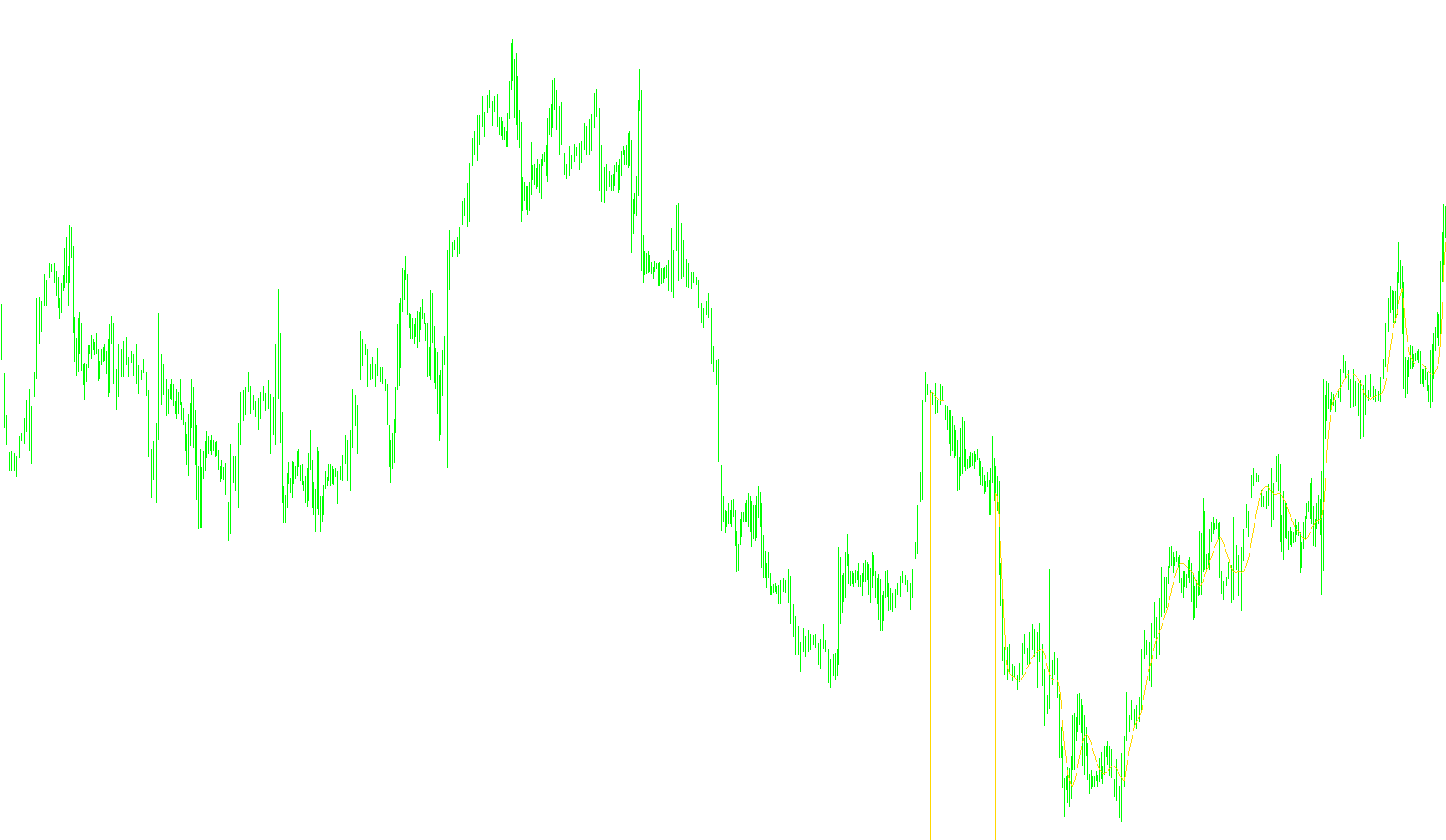
This script functions as a specialized technical analysis tool designed to generate a smoothed trend line on a trading chart. Its primary goal is to filter out market "noise"—the small, rapid price fluctuations that can make it difficult to see the broader direction of a currency or asset—providing a cleaner visual path for traders.
Core Logic and Behavior
The script utilizes a complex mathematical framework to determine its output. Rather than using a simple moving average (which can be slow to react) or a fast moving average (which can be too erratic), it employs a multi-layered smoothing process:
1. Dynamic Data Collection The tool looks back at a specific number of historical price points (defined by the "BarCount" setting). It captures these values and places them into a temporary internal memory bank to perform its calculations without disrupting the current live price action.
2. Advanced Smoothing Layers The logic moves through several distinct mathematical phases:
- Volatility Adjustment: It assesses the relationship between current prices and historical averages to determine how much "weight" to give to new information versus old information.
- Logarithmic Scaling: It uses logarithmic math to ensure that the curve remains smooth even when the market experiences sharp, vertical price movements.
- Trend Filtering: The script identifies whether the market is currently in a state of expansion or contraction and adjusts its internal "velocity" to prevent the line from overshooting the actual price.
3. Responsive Weighting (Phase and Length) The behavior of the indicator can be tuned by the user through two primary factors:
- Length: This dictates the "memory" of the indicator—how many bars of history it considers when determining the current trend.
- Phase: This acts as a sensitivity dial, allowing the user to decide how aggressively the line should follow the price. A higher phase typically results in a smoother, more lagging curve, while a lower phase makes it more responsive to immediate price changes.
4. Output Generation After processing all these layers of math, the script produces a single value (the JMA). This value is plotted on your chart as a continuous line. Because of its sophisticated nature, this line is designed to stay "hugging" the trend of the price closely while remaining smooth enough to serve as a reliable guide for identifying support, resistance, and momentum shifts.
Summary for the User
Think of this indicator as a high-tech "filter." It takes in the messy, jagged movements of the raw market and processes them through several layers of mathematical smoothing to output a clean, readable line. It aims to show you where the price wants to go by stripping away the temporary distractions of minor fluctuations.
/*-----------------------------+
|			       |
| Shared by www.Aptrafx.com    |
|			       |
+------------------------------*/

//+------------------------------------------------------------------+
//|                                                          JMA.mq4 |
//|                                                           Spiggy |
//|                                                                  |
//+------------------------------------------------------------------+
#property copyright "Spiggy"
#property link      ""

#property indicator_chart_window
#property indicator_buffers 1
#property indicator_color1 White

//---- input parameters
extern int       Len=14;
extern int       phase=0;
extern int       BarCount=300;
//---- buffers
double ExtMapBuffer1[];
//+------------------------------------------------------------------+
//| Custom indicator initialization function                         |
//+------------------------------------------------------------------+
int init()
  {
//---- indicators
   SetIndexStyle(0,DRAW_LINE);
   SetIndexBuffer(0,ExtMapBuffer1);
//----
   return(0);
  }
//+------------------------------------------------------------------+
//| Custor indicator deinitialization function                       |
//+------------------------------------------------------------------+
int deinit()
  {
//----

//----
   return(0);
  }
//+------------------------------------------------------------------+
//| Custom indicator iteration function                              |
//+------------------------------------------------------------------+
int start()
  {
   int    counted_bars=IndicatorCounted();
//----
// variable definitions
bool firstTime=True;
int AccountedBars=0;
int jj=0;
int ii=0;
int shift=0;
double series=0;

double vv=0;
double v1=0;
double v2=0;
double v3=0;
double v4=0;
double s8=0;
double s10=0;
double s18=0;
double s20=0;
int v5=0;
int v6=0;
double s28=0;
double s30=0;
int s38=0;
int s40=0;
int s48=0;
int s50=0;
int s58=0;
int s60=0;
double s68=0;
double s70=0;
double f8=0;
double f10=0;
double f18=0;
double f20=0;
double f28=0;
double f30=0;
double f38=0;
double f40=0;
double f48=0;
double f50=0;
double f58=0;
double f60=0;
double f68=0;
double f70=0;
double f78=0;
double f80=0;
double f88=0;
double f90=0;
double f98=0;
double fA0=0;
double fA8=0;
double fB0=0;
double fB8=0;
double fC0=0;
double fC8=0;
double fD0=0;
double f0=0;
double fD8=0;
double fE0=0;
double fE8=0;
int fF0=0;
double fF8=0;
int value2=0;
double JMA=0;
double prevtime=0;

double list[127];
double ring1[127];
double ring2[10];
double buffer[61];

ArrayInitialize(list,0);
ArrayInitialize(ring1,0);
ArrayInitialize(ring2,0);
ArrayInitialize(buffer,0);

if (firstTime)
{
  AccountedBars = Bars-BarCount;
  firstTime=False;
}

if ((CurTime()-prevtime)<30)
  return(-1);

prevtime=CurTime();
//SetLoopCount(0);
{
  s28 = 63;
  s30 = 64;
  for ( ii = 1 ; ii <= s28 ; ii++)
  {
    list[ii] = -1000000;
  }
  for ( ii = s30 ; ii <= 127  ; ii++ )
  {
    list[ii] = 1000000;
  }
  f0 = 1;
}

//{--------------------------------------------------------------------}
for ( shift=BarCount ; shift >= 0 ; shift-- )
{
  series=Close[shift];
  if (fF0 < 61)
  {
    fF0= fF0 + 1;
    buffer[fF0] = series;
  }
  //{--------------------------------------------------------------------}
  // { main cycle }
  if (fF0 > 30)
  {
    if (Len < 1.0000000002)
    {
      f80 = 0.0000000001; //{1.0e-10}
    }
    else
    {
      f80 = (Len - 1) / 2.0;
    }

    if (phase < -100)
    {
      f10 = 0.5;
    }
    else
    {
      if (phase > 100)
      {
           f10 = 2.5;
      }
      else
      {
        f10 = phase / 100 + 1.5;
      }
    }

    v1 = MathLog(MathSqrt(f80));
    v2 = v1;
    if (v1 / MathLog(2.0) + 2.0 < 0.0)
    {
      v3 = 0;
    }
    else
    {
      v3 = v2 / MathLog(2.0) + 2.0;
    }
    f98 = v3;

    if (0.5 <= f98 - 2.0)
    {
      f88 = f98 - 2.0;
    }
    else
    {
      f88 = 0.5;
    }

    f78 = MathSqrt(f80) * f98;
    f90 = f78 / (f78 + 1.0);
    f80 = f80 * 0.9;
    f50 = f80 / (f80 + 2.0);

    if (f0 != 0)
    {
      f0 = 0;
      v5 = 0;
      for ( ii = 1 ; ii <=29 ; ii++ )
      {
        if (buffer[ii+1] != buffer[ii])
        {
          v5 = 1.0;
        }
      }

      fD8 = v5*30.0;
      if (fD8 == 0)
      {
        f38 = series;
      }
      else
      {
        f38 = buffer[1];
      }
      f18 = f38;
      if (fD8 > 29)
        fD8 = 29;
    }
    else
      fD8 = 0;

    for ( ii = fD8 ; ii >= 0 ; ii-- )
    { //{ another bigcycle...}
      value2=31-ii;
      if (ii == 0)
      {
        f8 = series;
      }
      else
      {
        f8 = buffer[value2];
      }
      f28 = f8 - f18;
      f48 = f8 - f38;
      if (MathAbs(f28) > MathAbs(f48))
      {
        v2 = MathAbs(f28);
      }
      else
      {
        v2 = MathAbs(f48);
      }
      fA0 = v2;
      vv = fA0 + 0.0000000001; //{1.0e-10;}

      if (s48 <= 1)
      {
        s48 = 127;
      }
      else
      {
        s48 = s48 - 1;
      }
      if (s50 <= 1)
      {
        s50 = 10;
      }
      else
      {
        s50 = s50 - 1;
      }
      if (s70 < 128)
        s70 = s70 + 1;
      s8 = s8 + vv - ring2[s50];
      ring2[s50] = vv;
      if (s70 > 10)
      {
        s20 = s8 / 10;
      }
      else
        s20 = s8 / s70;

      if (s70 > 127)
      {
        s10 = ring1[s48];
        ring1[s48] = s20;
        s68 = 64;
        s58 = s68;
        while (s68 > 1)
        {
          if (list[s58] < s10)
          {
            s68 = s68 *0.5;
            s58 = s58 + s68;
          }
          else
          if (list[s58] <= s10)
          {
            s68 = 1;
          }
          else
          {
            s68 = s68 *0.5;
            s58 = s58 - s68;
          }
        }
      }
      else
      {
        ring1[s48] = s20;
        if (s28 + s30 > 127)
        {
          s30 = s30 - 1;
          s58 = s30;
        }
        else
        {
          s28 = s28 + 1;
          s58 = s28;
        }
        if (s28 > 96)
        {
          s38 = 96;
        }
        else
          s38 = s28;
        if (s30 < 32)
        {
          s40 = 32;
        }
        else
          s40 = s30;
      }

      s68 = 64;
      s60 = s68;
      while (s68 > 1)
      {
        if (list[s60] >= s20)
        {
          if (list[s60 - 1] <= s20)
          {
            s68 = 1;
          }
          else
          {
            s68 = s68 *0.5;
            s60 = s60 - s68;
          }
        }
        else
        {
          s68 = s68 *0.5;
          s60 = s60 + s68;
        }
        if ((s60 == 127) && (s20 > list[127]))
          s60 = 128;
      }

      if (s70 > 127)
      {
        if (s58 >= s60)
        {
          if ((s38 + 1 > s60) && (s40 - 1 < s60))
          {
            s18 = s18 + s20;
          }
          else
          if ((s40 > s60) && (s40 - 1 < s58))
            s18 = s18 + list[s40 - 1];
        }
        else
        if (s40 >= s60)
        {
          if ((s38 + 1 < s60) && (s38 + 1 > s58))
            s18 = s18 + list[s38 + 1];
        }
        else
        if (s38 + 2 > s60)
        {
          s18 = s18 + s20;
        }
        else
        if ((s38 + 1 < s60) && (s38 + 1 > s58))
          s18 = s18 + list[s38 + 1];

        if (s58 > s60)
        {
          if ((s40 - 1 < s58) && (s38 + 1 > s58))
          {
            s18 = s18 - list[s58];
          }
          else
          if ((s38 < s58) && (s38 + 1 > s60))
            s18 = s18 - list[s38];
        }
        else
        {
          if ((s38 + 1 > s58) && (s40 - 1 < s58))
          {
            s18 = s18 - list[s58];
          }
          else
          if ((s40 > s58) && (s40 < s60))
            s18 = s18 - list[s40];
        }
      }

      if (s58 <= s60)
      {
        if (s58 >= s60)
        {
          list[s60] = s20;
        }
        else
        {
          for ( jj = s58 + 1 ; jj <= s60 - 1 ; jj++ )
          {
            list[jj - 1] = list[jj];
          }
          list[s60 - 1] = s20;
        }
      }
      else
      {
        for ( jj = s58 - 1 ; jj >= s60 ; jj-- )
        {
          list[jj + 1] = list[jj];
        }
        list[s60] = s20;
      }

      if (s70 <= 127)
      {
        s18 = 0;
        for (jj = s40 ; jj <= s38 ; jj++)
        {
          s18 = s18 + list[jj];
        }
      }
      f60 = s18 / (s38 - s40 + 1);
      if (fF8 + 1 > 31)
      {
        fF8 = 31;
      }
      else
        fF8 = fF8 + 1;

      if (fF8 <= 30)
      {
        if (f28 > 0)
        {
          f18 = f8;
        }
        else
          f18 = f8 - f28 * f90;
        if (f48 < 0)
        {
          f38 = f8;
        }
        else
          f38 = f8 - f48 * f90;
        fB8 = series;
        //{EasyLanguage does not have "continue" statement}
        if (fF8 != 30)
        {
          continue;
        }
        if (fF8 == 30)
        {
          fC0 = series;
          if (MathCeil(f78) >= 1)
          {
            v4 = MathCeil(f78);
          }
          else
            v4 = 1;
          fE8 = MathCeil(v4);
          if (MathFloor(f78) >= 1)
          {
            v2 = MathFloor(f78);
          }
          else
            v2 = 1;
          fE0 = MathCeil(v2);
          if (fE8 == fE0)
          {
            f68 = 1;
          }
          else
          {
            v4 = fE8 - fE0;
            f68 = (f78 - fE0) / v4;
          }
          if (fE0 <= 29)
          {
            v5 = fE0;
          }
          else
            v5 = 29;
          if (fE8 <= 29)
          {
            v6 = fE8;
          }
          else
            v6 = 29;
          fA8 = (series - buffer[fF0 - v5]) * (1 - f68) / fE0 + (series - buffer[fF0 - v6]) * f68 / fE8;
        }
      }
      else
      {
        if (f98 >= MathPow(fA0/f60, f88))
        {
          v1 = MathPow(fA0/f60, f88);
        }
        else
          v1 = f98;
        if (v1 < 1)
        {
          v2 = 1;
        }
        else
        {
          if (f98 >= MathPow(fA0/f60, f88))
          {
            v3 = MathPow(fA0/f60, f88);
          }
          else
            v3 = f98;
          v2 = v3;
        }
        f58 = v2;
        f70 = MathPow(f90, MathSqrt(f58));
        if (f28 > 0)
        {
          f18 = f8;
        }
        else
        {
          f18 = f8 - f28 * f70;
        }
        if (f48 < 0)
        {
          f38 = f8;
        }
        else
        {
          f38 = f8 - f48 * f70;
        }
      }
    }

    if (fF8 > 30)
    {
      f30 = MathPow(f50, f58);
      fC0 = (1 - f30) * series + f30 * fC0;
      fC8 = (series - fC0) * (1 - f50) + f50 * fC8;
      fD0 = f10 * fC8 + fC0;
      f20 = -f30 * 2;
      f40 = f30 * f30;
      fB0 = f20 + f40 + 1;
      fA8 = (fD0 - fB8) * fB0 + f40 * fA8;
      fB8 = fB8 + fA8;
    }
    JMA= fB8;
  }
  if (fF0 <= 30)
  {
    JMA=0;
  }

  Print ("JMA is " + JMA + " shift is " + shift);
  ExtMapBuffer1[shift]=JMA;

  if (shift>0)
  {
    AccountedBars=AccountedBars+1;
  }
}
//----
   return(0);
  }
//+------------------------------------------------------------------+
Comments