Ichi_KUMO_TC_sw
Download script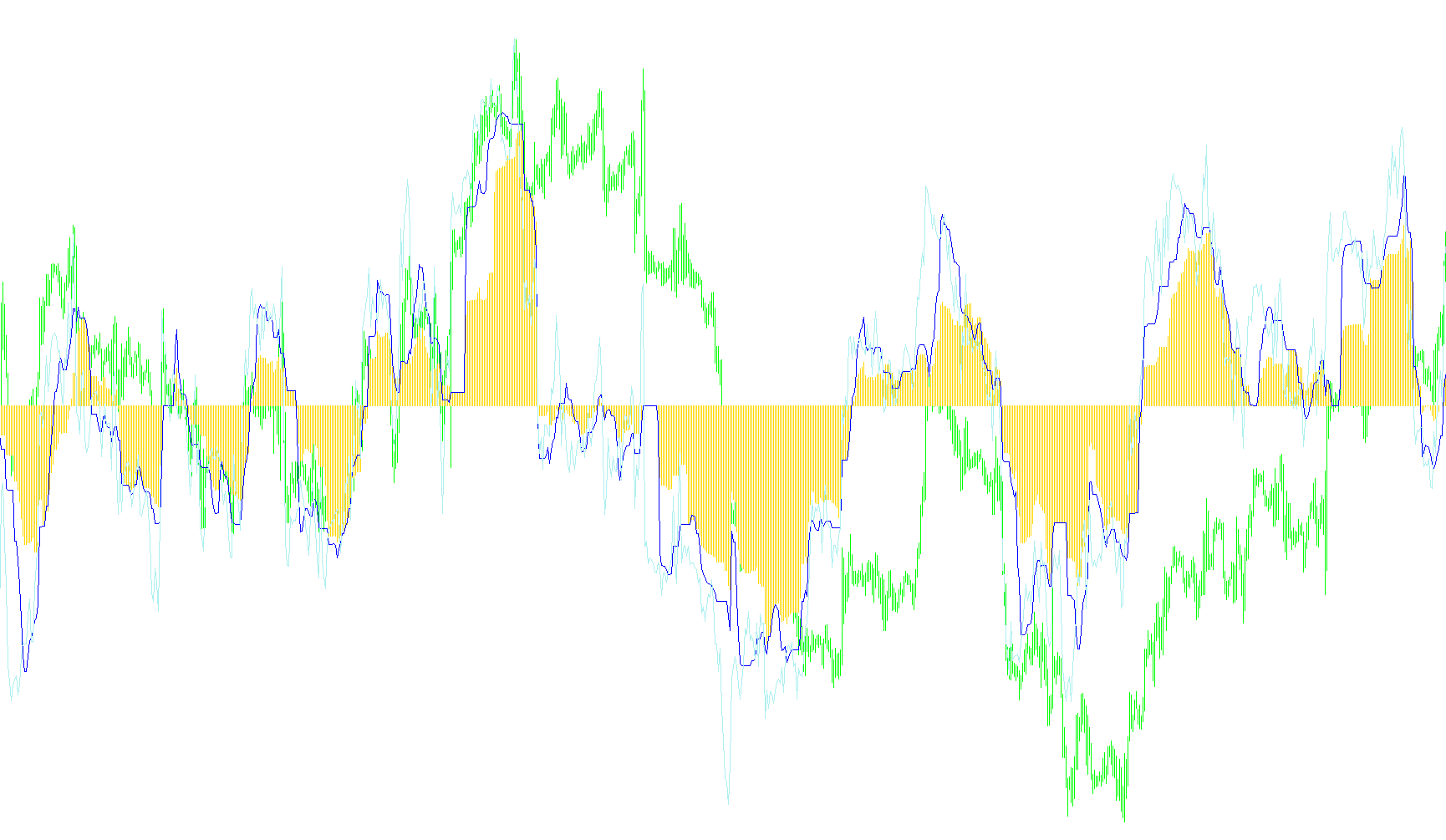
This custom technical indicator is designed to provide traders with a specialized visual analysis of the Ichimoku Cloud (Kumo) system. Rather than displaying standard price data, it focuses on calculating and visualizing specific mathematical relationships between different components of the Ichimoku Cloud to highlight market momentum and trend dynamics.
Core Logic Overview
The indicator operates by analyzing three primary elements of the Ichimoku framework: the Tenkan-sen (Conversion Line), the Kijun-sen (Base Line), and the Senkou Span A & B (which form the "Cloud" or Kumo).
Instead of plotting these independently, the script calculates the "distance" or variance between these elements at specific points in time. By subtracting one component from another, the tool creates a dynamic measurement that helps traders identify how far the current price sentiment is deviating from historical averages and cloud boundaries.
Key Visual Components
The indicator generates three distinct visual data streams to help clarify market structure:
- Kumo Variance (Histogram): This calculates the spread between the two edges of the Ichimoku Cloud (Senkou Span A and Senkou Span B). By visualizing this as a histogram, it allows you to see the thickness and expansion of the "Cloud." A widening cloud often indicates increased volatility or a strengthening trend, while a narrowing cloud can signal a period of consolidation.
- Tenkan Deviation (Line): This measures the distance between the Tenkan-sen and the base of the Kijun-sen. Because the Tenkan-sen reacts faster to price changes than the Kijun-sen, this line helps traders identify the immediate "speed" of the market movement relative to its broader base.
- Price Check (Line): This component calculates a specific relationship involving the Chinkou Span (the lagging line). It effectively projects historical data forward to provide a "check" on where current price action sits in relation to past cycles, helping to confirm whether a trend is healthy or overextended.
Practical Application for Traders
By using these specific mathematical differences, the tool simplifies complex Ichimoku data into three clear visuals. This allows you to:
- Measure Momentum: See how aggressively the price is pulling away from its equilibrium.
- Assess Volatility: Monitor the expansion and contraction of the Cloud's thickness in real-time.
- Identify Exhaustion: Recognize when the gap between short-term and long-term averages becomes too wide, which may signal a potential trend reversal or a need for caution.
//+------------------------------------------------------------------+
//| KUMO Tenkan Price (ChikoShift)                          MACD.mq4 |
//+------------------------------------------------------------------+
//2008forextsd

#property copyright "Copyright © 2006, MetaQuotes Software Corp."
#property link      "http://www.metaquotes.net"

#property indicator_separate_window

#property indicator_buffers 3
#property indicator_color1 RoyalBlue
#property indicator_color2 Maroon
#property indicator_color3 Green

extern int Tenkan=9;
extern int Kijun=26;
extern int Senkou=52;
extern int KumoShift=0;
extern string note = "IchimokuKumoShift=Kijun";


double ExtMapBuffer1[];
double ExtMapBuffer2[];
double ExtMapBuffer3[];

//+------

int init()
  {


  SetIndexBuffer    (0,ExtMapBuffer1);
  SetIndexStyle     (0,DRAW_HISTOGRAM);
  SetIndexDrawBegin (0,Senkou);
  SetIndexShift     (0,KumoShift);

  SetIndexBuffer    (1,ExtMapBuffer2);
  SetIndexStyle     (1,DRAW_LINE);
  SetIndexDrawBegin (1,Senkou);

  SetIndexBuffer    (2,ExtMapBuffer3);
  SetIndexStyle     (2,DRAW_LINE);
  SetIndexDrawBegin (2,Senkou);


   SetIndexLabel(0,"Kumo");
   SetIndexLabel(1,"Tenkan");
   SetIndexLabel(2,"PriceChk");


IndicatorShortName("Ichi KUMO TC ("+Tenkan+","+Kijun+","+Senkou+"),"+KumoShift+": ");

   return(0);
  }

//+----------

int start()
  {
   int i,limit,counted_bars=IndicatorCounted();

   if(counted_bars<0) return(-1);
   if(counted_bars>0) counted_bars--;

   limit=Bars-counted_bars;


   for (i=limit; i>=0; i--)
     {

  ExtMapBuffer1[i]  = iIchimoku(NULL, 0, Tenkan, Kijun, Senkou, MODE_SENKOUSPANA, i-Kijun)-
                      iIchimoku(NULL, 0, Tenkan, Kijun, Senkou, MODE_SENKOUSPANB, i-Kijun);

  ExtMapBuffer2[i]  = iIchimoku(NULL, 0, Tenkan, Kijun, Senkou, MODE_TENKANSEN,   i)-
                      iIchimoku(NULL, 0, Tenkan, Kijun, Senkou, MODE_SENKOUSPANB, i-Kijun);

  ExtMapBuffer3[i]  = iIchimoku(NULL, 0, Tenkan, Kijun, Senkou, MODE_CHINKOUSPAN, i+Kijun)-
                      iIchimoku(NULL, 0, Tenkan, Kijun, Senkou, MODE_SENKOUSPANB, i-Kijun);

      }


  return(0);
 }
//+-----------
Comments