Divergence
Download script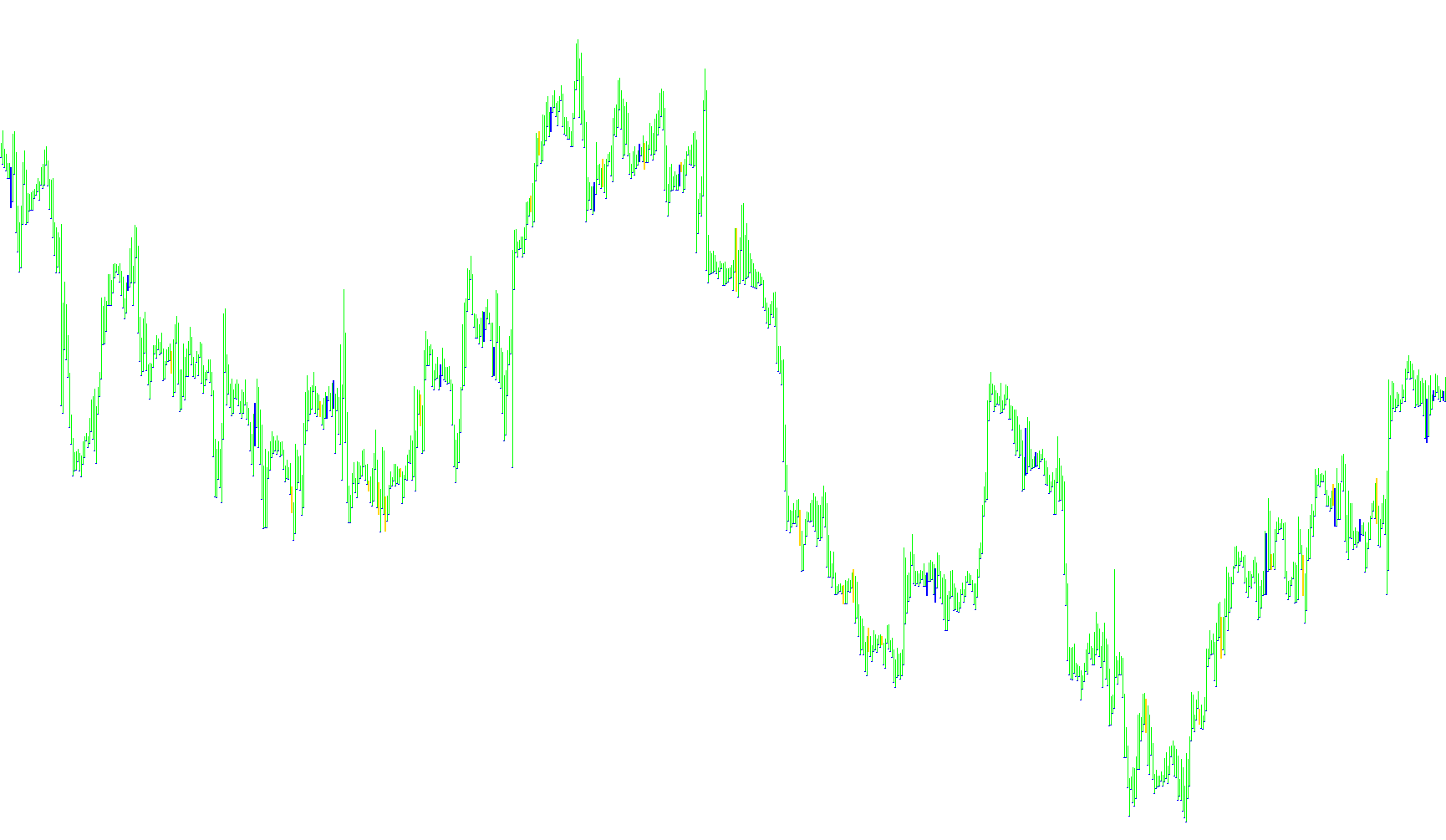
This tool is designed to identify "divergences," which occur when the price action of a financial instrument moves in one direction while a technical momentum indicator moves in the opposite direction. In trading, these discrepancies are often viewed as signals that the current trend is losing steam and a reversal may be approaching.
How the Logic Works
1. Data Selection The script begins by gathering two types of data:
- Price Movement: It tracks specific price points (such as the Highs or Lows) to see where the market is physically moving.
- Momentum Indicators: You can choose between several different technical oscillators (like MACD, RSI, ADX, or Momentum). These indicators measure the "strength" or "speed" of the market movement.
2. Peak and Trough Detection The script scans back through historical data to find significant turning points. It looks for "peaks" (high points) and "troughs" (low points) in both the price and the chosen indicator.
- To ensure these are meaningful turns rather than minor fluctuations, it uses a "depth" filter. This helps the tool ignore small wobbles and focus only on prominent structural changes in the chart.
3. Identifying Divergence The core logic compares the relationship between the most recent significant peak/trough and the one preceding it:
- Bullish Divergence: The script looks for a scenario where the price makes a "lower low" (the price dropped further), but the momentum indicator makes a "higher low." This suggests that even though the price is falling, the selling pressure is weakening.
- Bearish Divergence: Conversely, it looks for a scenario where the price makes a "higher high," but the momentum indicator makes a "lower high." This suggests that despite the price rising, the buying momentum is exhausting.
4. Visual Output Once the script identifies these specific mathematical disagreements between price and momentum:
- It marks the location on your chart.
- It uses two distinct buffers (visual layers) to highlight these zones, making it easier for a user to see exactly where the market's internal strength no longer matches its external price movement.
Summary of Purpose
Essentially, this script acts as an early-warning system. It filters out the "noise" of daily trading by looking for moments where the market's "engine" (momentum) is no longer moving in sync with the "vehicle" (price), highlighting potential areas where a trend might be about to flip.
//+------------------------------------------------------------------+
//|                                                   Divergence.mq4 |
//|                                    Copyright © 2005, Pavel Kulko |
//|                                                  polk@alba.dp.ua |
//+------------------------------------------------------------------+
#property copyright "Copyright © 2005, Pavel Kulko"
#property link      "polk@alba.dp.ua"

#property indicator_chart_window
#property indicator_buffers 2
#property indicator_minimum -1
#property indicator_maximum 1
#property indicator_color1 Aqua
#property indicator_color2 Red


extern int ind = 1;        //MACD=1,  RSI=2,  DMI=3,  Mom=4
extern int pds = 10;       //indicator periods
extern int f = 1;          //price field: Close=1, High/Low=2
extern double Ch = 0;      //peak/trough depth minimum (0-1)
extern int shift = 0;      //shift signals back to match divergences
extern int MaxBars=1000;

double DivUpBuffer[],DivDnBuffer[];
double R1[],R2[],y[],xd[],xu[];
double fCh;
//+------------------------------------------------------------------+
//| Custom indicator initialization function                         |
//+------------------------------------------------------------------+
int init() {
   IndicatorBuffers(7);
   SetIndexStyle(0,DRAW_HISTOGRAM,STYLE_SOLID,2);
   SetIndexBuffer(0,DivUpBuffer);
   SetIndexStyle(1,DRAW_HISTOGRAM,STYLE_SOLID,2);
   SetIndexBuffer(1,DivDnBuffer);
   SetIndexBuffer(2,R1);
   SetIndexBuffer(3,R2);
   SetIndexBuffer(4,y);
   SetIndexBuffer(5,xd);
   SetIndexBuffer(6,xu);
   return(0);
  }
//+------------------------------------------------------------------+
//| Custor indicator deinitialization function                       |
//+------------------------------------------------------------------+
int deinit()
  {
   return(0);
  }
//+------------------------------------------------------------------+
//| Custom indicator iteration function                              |
//+------------------------------------------------------------------+
int start() {
   int CNmb1,CNmb2,CNmb3,CNmb4;
   double Pkx1,Pkx2,Trx1,Trx2,Pky1,Pky2,Try1,Try2;
   bool Trx,Pkx,Try,Pky;

   fCh = Ch/100.0;

   int    counted_bars=IndicatorCounted();
   int limit = Bars-counted_bars-1;
   if(limit>MaxBars) limit = MaxBars;
   for(int i=limit; i>=0; i--) {
     DivUpBuffer[i] = Low[i];
     DivDnBuffer[i] = Low[i];
     switch(ind) {
       case 1: y[i] = iMACD(NULL,0,12,26,9,PRICE_CLOSE,MODE_MAIN,i); break;
       case 2: y[i] = iRSI(NULL,0,pds,PRICE_CLOSE,i); break;
       case 3: y[i] = iADX(NULL,0,pds,PRICE_CLOSE,MODE_MAIN,i); break;
       default : y[i] = iMomentum(NULL,0,pds,PRICE_CLOSE,i); break;
     }
     if(f==1) xu[i] = Close[i];
     else xu[i] = High[i];
     if(f==1) xd[i] = Close[i];
     else xd[i] = Low[i];
   }
   for(i=limit; i>=0; i--) {
     CNmb1 = 0; CNmb2 = 0; CNmb3 = 0; CNmb4 = 0;
     for(int j=i; j<MaxBars; j++) {
       Pkx = (xu[j] < xu[j-1]) && (xu[j-1] > xu[j-2]) && (xu[j-1] >= (xu[j]+xu[j-2])/2.0*(1.0+fCh));
       if(Pkx) CNmb1++;
       if(Pkx && CNmb1==1) Pkx1 = xu[j-1];
       if(Pkx && CNmb1==2) Pkx2 = xu[j-1];

       Trx = (xd[j] > xd[j-1]) && (xd[j-1] < xd[j-2]) && (xd[j-1] <= (xd[j]+xd[j-2])/2.0*(1.0-fCh));
       if(Trx) CNmb2++;
       if(Trx && CNmb2==1) Trx1 = xd[j-1];
       if(Trx && CNmb2==2) Trx2 = xd[j-1];

       Pky = (y[j] < y[j-1]) && (y[j-1] > y[j-2]) && (y[j-1] >= (y[j]+y[j-2])/2.0*(1.0+fCh));
       if(Pky) CNmb3++;
       if(Pky && CNmb3==1) Pky1 = y[j-1];
       if(Pky && CNmb3==2) Pky2 = y[j-1];

       Try = (y[j] > y[j-1]) && (y[j-1] < y[j-2]) && (y[j-1] <= (y[j]+y[j-2])/2.0*(1.0-fCh));
       if(Try) CNmb4++;
       if(Try && CNmb4==1) Try1 = y[j-1];
       if(Try && CNmb4==2) Try2 = y[j-1];

       if(CNmb1>=2 && CNmb2>=2 && CNmb3>=2 && CNmb4>=2) break;
     }
     Pkx = (xu[i] < xu[i-1]) && (xu[i-1] > xu[i-2]) && (xu[i-1] >= (xu[i]+xu[i-2])/2.0*(1.0+fCh));
     Trx = (xd[i] > xd[i-1]) && (xd[i-1] < xd[i-2]) && (xd[i-1] <= (xd[i]+xd[i-2])/2.0*(1.0-fCh));
     Pky = (y[i] < y[i-1]) && (y[i-1] > y[i-2]) && (y[i-1] >= (y[i]+y[i-2])/2.0*(1.0+fCh));
     Try = (y[i] > y[i-1]) && (y[i-1] < y[i-2]) && (y[i-1] <= (y[i]+y[i-2])/2.0*(1.0-fCh));

     R1[i] = 0;
     if(Trx && Try && Trx1<Trx2 && Try1>Try2) R1[i] = 1;
     R2[i] = 0;
     if(Pkx && Pky && Pkx1>Pkx2 && Pky1<Pky2) R2[i] = 1;

     if(R1[i+shift] - R2[i+shift] > 0) {
       DivUpBuffer[i+shift] = High[i];
       DivDnBuffer[i+shift] = Low[i];
     }
     if(R1[i+shift] - R2[i+shift] < 0) {
       DivDnBuffer[i] = High[i];
       DivUpBuffer[i] = Low[i];
     }
   }
   return(0);
}
//+------------------------------------------------------------------+
Comments