Batfink Signal (Target 3)
Download script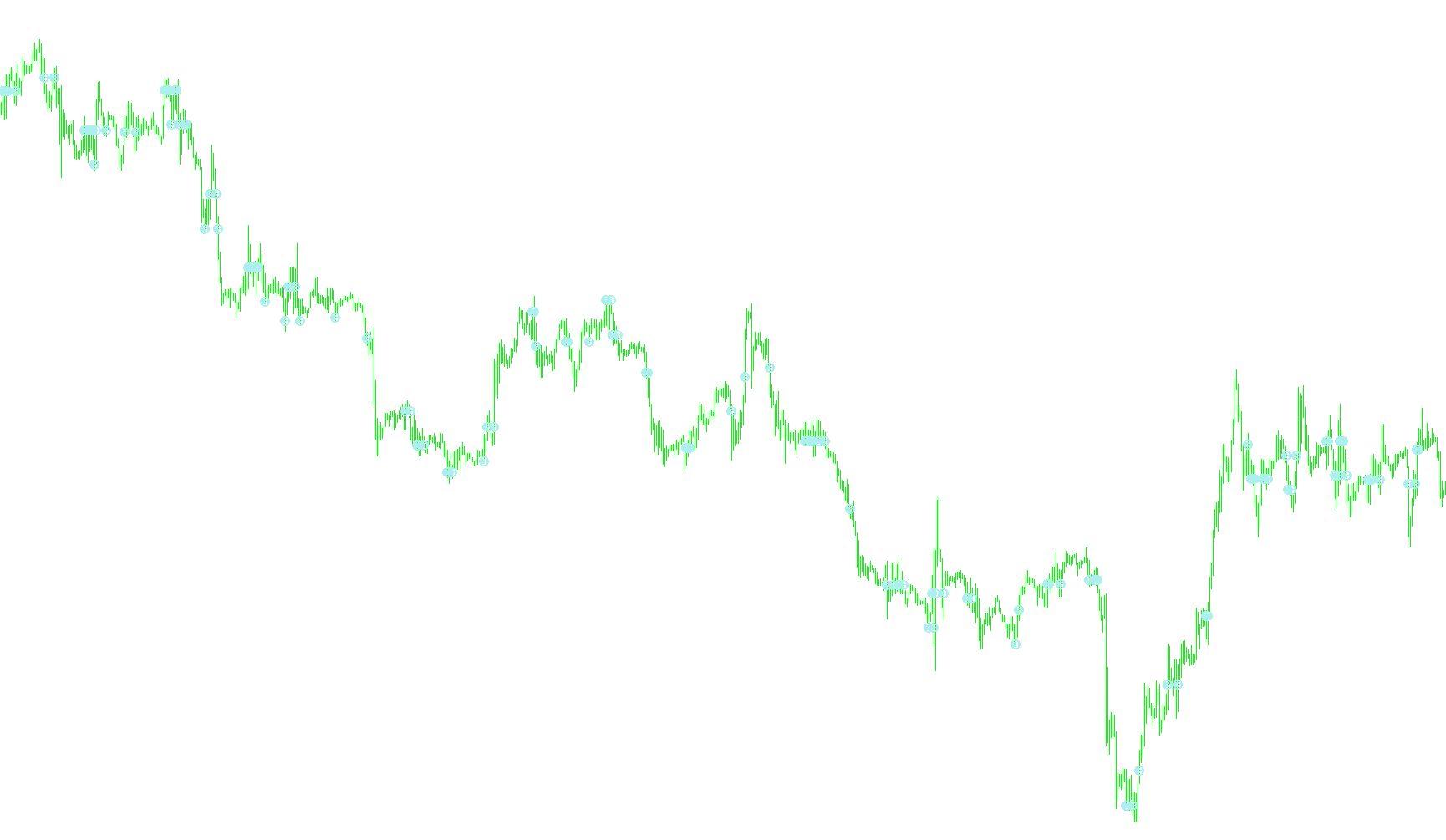
This script is designed to help traders identify specific market breakout moments by automatically calculating and highlighting "zones" based on price action during the early hours of a trading day. It essentially acts as a visual guide that monitors price movements and alerts you when the market pushes beyond certain established boundaries.
Core Logic and Functionality
1. Time Zone Synchronization The tool is built to handle different time zones. Since traders operate in various regions, it allows for specific adjustments (offsets) so that the "start of the day" is correctly identified based on your specific broker's server time or your local time.
2. Period Segmentation Instead of looking at the entire trading day as one block, the script breaks the day down into three distinct phases:
- An initial early morning period.
- A secondary middle period.
- The remainder of the trading day.
3. Dynamic Zone Calculation The script tracks the price extremes (the highest and lowest points) reached during these specific time windows. Once a period concludes, the script takes the price data from that window to establish a "Zone."
Specifically, it calculates a boundary by taking the price level of the completed period and adding or subtracting a user-defined amount of pips (a "buffer"). This creates an upper and lower boundary line on your chart.
4. Breakout Detection The primary purpose of the script is to identify when the current market price "breaks out" of these calculated zones:
- Buy Signals: The script looks for instances where the price moves from below the upper boundary to above it.
- Sell Signals: The script looks for instances where the price moves from above the lower boundary to below it.
5. Visual and Audible Alerts To ensure you don't miss these movements, the script provides three layers of feedback:
- Visual Lines: It draws the upper and lower boundaries directly on your chart so you can see the "walls" the price is interacting with.
- On-Chart Arrows: When a breakout occurs, an arrow appears on the chart at the exact point where the signal was triggered.
- Pop-up Alerts: If enabled, the script will trigger a real-time notification alert on your screen the moment a breakout signal is detected.
Summary for the User
In simple terms, this tool identifies how much "space" the market covers during the start of the trading day. It then draws two lines representing a specific distance away from that price action. Whenever the price breaks through those lines, the script signals a potential breakout, helping you identify high-momentum movements in real-time.
//+------------------------------------------------------------------+
//|  Batfink Daily Range.MT4                                         |
//|                                                                  |
//+------------------------------------------------------------------+


/* Introduction:

   Draw Line at 00:00GMT + and - 85

   TimeZONE Information - Indicator can be used for different Time Zones.
                          For Batfink settings set to -5 for MetaQuotes demo Server
                          This will place home line at 00:00GMT Time

*/

#property indicator_chart_window
#property indicator_buffers 3
#property indicator_color1 White
#property indicator_color2 White
#property indicator_color3 Orange

extern bool DoEntryAlerts= false;
extern int LocalTimeZone= 2;
extern int DestTimeZone= 0;
extern int PipsForEntry= 85;

double Zone1Upper[];
double Zone1Lower[];
double EntrySignalsBuffer[];

//+------------------------------------------------------------------+
//| Custom indicator initialization function                         |
//+------------------------------------------------------------------+
int init()
{
   SetIndexStyle(0,DRAW_LINE);
   SetIndexBuffer(0,Zone1Upper);
   SetIndexEmptyValue(0, 0.0);

   SetIndexStyle(1,DRAW_LINE);
   SetIndexBuffer(1,Zone1Lower);
   SetIndexEmptyValue(1, 0.0);

   SetIndexStyle(2,DRAW_ARROW);
   SetIndexArrow(2, 142);
   SetIndexBuffer(2, EntrySignalsBuffer);
   SetIndexEmptyValue(2, 0.0);
   SetIndexLabel(2, "Zone Breakout Signal");

   return(0);
}

int deinit()
{

   return(0);
}

//+------------------------------------------------------------------+
//| Custom indicator iteration function                              |
//+------------------------------------------------------------------+
int start()
{
   int counted_bars= IndicatorCounted(),
         lastbar, result;

   if (Bars<=100)
      return(0);

   if (counted_bars>0)
      counted_bars--;

   lastbar= Bars - counted_bars;

   BreakoutRanges(0, lastbar, LocalTimeZone, DestTimeZone);

   //
   // check alerts
   //

   static datetime lastalerttime;
   static double lastalertprice;

   if (DoEntryAlerts && lastalerttime!=Time[0] && EntrySignalsBuffer[0]!=0 && EntrySignalsBuffer[0]!=lastalertprice) {
      Alert("ZoneBreakout signals entry!");
      lastalerttime= Time[0];
      lastalertprice= EntrySignalsBuffer[0];
   }
   else {
      lastalerttime= 0;
      lastalertprice= 0.0;
   }


   return(0);
}


//+------------------------------------------------------------------+
//| Compute index of first/last bar of yesterday and today           |
//+------------------------------------------------------------------+
int BreakoutRanges(int offset, int lastbar, int tzlocal, int tzdest)
{
   int i, j, k,
       tzdiff= tzlocal - tzdest,
       tzdiffsec= tzdiff*3600,
       tidxstart[2]= { 0, 0},
       tidxend[2]= { 0, 0 };
   double topen[2]= { 0.0, 0.0 },
           tclose[2]= { 99999.9, 99999.9 };
   string tfrom[3]= { "07:00", "08:00" ,  /*rest of day: */ "12:00"},
          tto[3]=   { "08:00", "12:00",   /*rest of day: */ "24:00" },
          tday;
   bool inperiod= -1;
   datetime timet;


   //
   // search back for the beginning of the day
   //
   tday= TimeToStr(Time[lastbar]-tzdiffsec, TIME_DATE);
   for (  ; lastbar<Bars; lastbar++) {
      if (TimeToStr(Time[lastbar] - tzdiffsec, TIME_DATE)!=tday) {
         lastbar--;
         break;
      }
   }


   //
   // find the high/low for the two periods and carry them forward through the day
   //
   tday= "XXX";
   for (i= lastbar; i>=offset; i--) {

      timet= Time[i] - tzdiffsec;   // time of this bar

      string timestr= TimeToStr(timet, TIME_MINUTES),    // current time HH:MM
             thisday= TimeToStr(timet, TIME_DATE);       // current date

      EntrySignalsBuffer[i]= 0;

      //
      // for all three periods (first period, second period, rest of day)
      //
      for (j= 0; j<3; j++) {

         if (tfrom[j]<=timestr && timestr<tto[j]) {   // Bar[i] in this period

            if (inperiod!=j) { // entered new period, so last one is completed

               if (j>0) {      // now draw high/low back over the recently completed period

                  for (k= tidxstart[j-1]; k>=tidxend[j-1]; k--) {
                     if (j-1==0) {
                        Zone1Upper[k]= tclose[j-1];
                        Zone1Lower[k]= tclose[j-1];

                  }
               }

               inperiod= j;   // remember current period
            }


            // for the current period find idxstart, idxend and compute high/low
            if (tidxstart[j]==0) {
               tidxstart[j]= i;
               tday= thisday;
            }

            tidxend[j]= i;

            topen[j]= MathMax(topen[j], Open[i]);
            tclose[j]= MathMin(tclose[j], Close[i]);
         }
      }


      //------------------------------------------------------------------------
      // carry forward the periods for which we have definite high/lows
      //
      if (inperiod>=1 && tday==thisday) { // first time period completed
         Zone1Upper[i]= tclose[0] + PipsForEntry*Point;
         Zone1Lower[i]= tclose[0] - PipsForEntry*Point;
    }

         CheckSignal(i, Zone1Upper[i], OP_BUY, EntrySignalsBuffer);
         CheckSignal(i, Zone1Lower[i], OP_SELL, EntrySignalsBuffer);
      }
    {   // none yet to carry forward (zero to clear old values, e.g. from switching timeframe)
         Zone1Upper[i]= 0;
         Zone1Lower[i]= 0;
      }


      //
      // at the beginning of a new day reset everything
      //
      if (tday!="XXX" && tday!=thisday) {
         Print("#", i, "new day ", thisday, "/", tday);

         tday= "XXX";

         inperiod= -1;

         for (j= 0; j<2; j++) {
            tidxstart[j]= 0;
            tidxend[j]= 0;

            topen[j]= 0;
            tclose[j]= 99999;
         }
      }
   }

   return (0);
}
//+------------------------------------------------------------------+
//| Check price break                                                |
//+------------------------------------------------------------------+
bool CheckSignal(int shift, double price, int type, double &signalbuffer[])
{
   bool signal= false;

   if (type==OP_BUY && ((Open[shift]<price && High[shift]>price) || (Close[shift+1]<price && Open[shift]>price)) ) {
      signalbuffer[shift]= price;
      signal= true;
  }

   if (type==OP_SELL && (Open[shift]>price && Low[shift]<price) || (Close[shift+1]>price && Open[shift]<price)) {
      signalbuffer[shift]= price;
      signal= true;
  }

  return (signal);
}
Comments