Turbo_JMA
Download script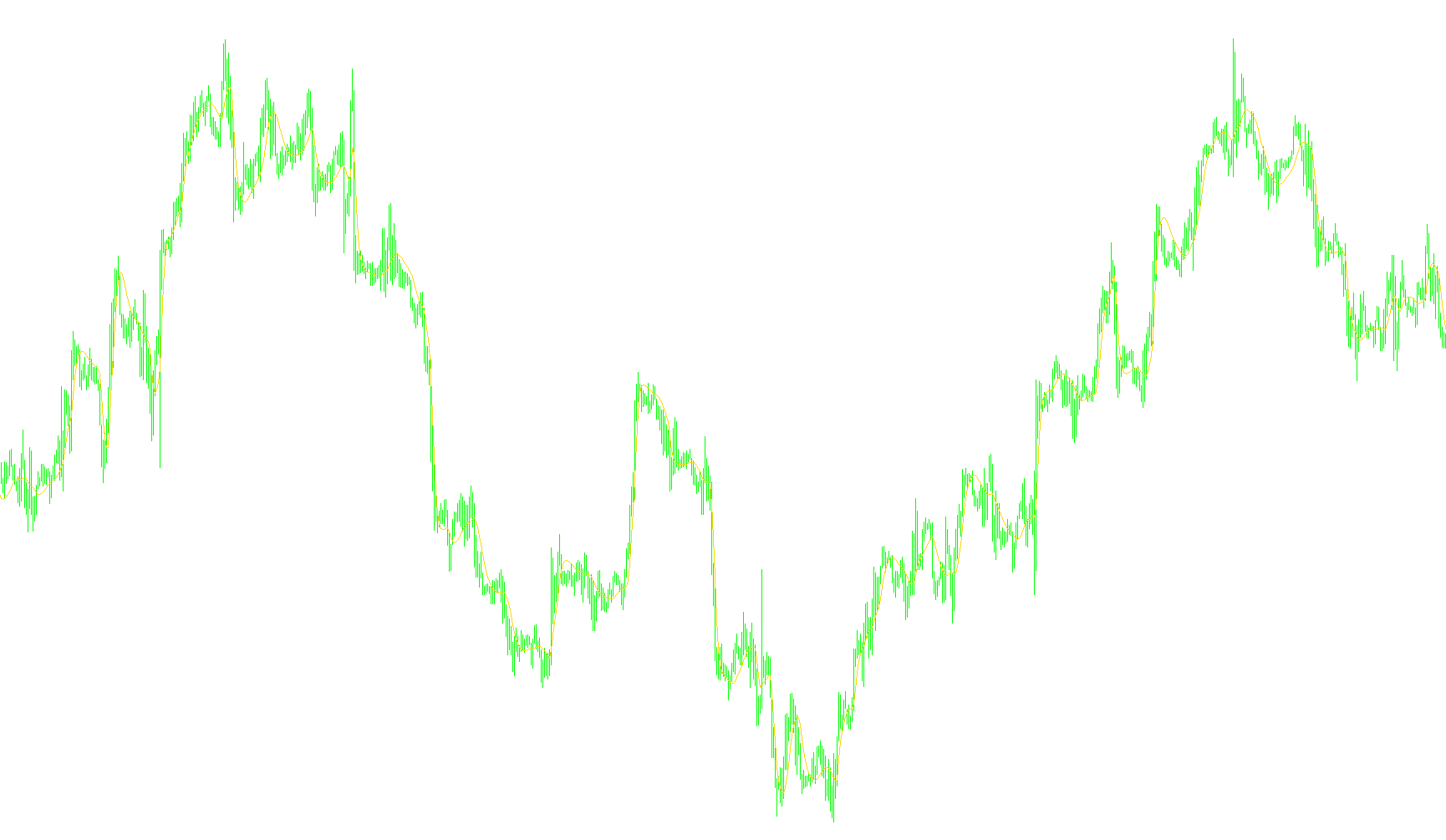
This script functions as a sophisticated technical analysis tool designed to smooth out price fluctuations in trading charts while minimizing the "lag" typically associated with standard moving averages. It utilizes an advanced mathematical framework to identify and follow market trends more fluidly.
Core Data Processing
The indicator begins by calculating a specific price point for every candle on the chart. Rather than using just the closing price, it calculates the Typical Price, which is the average of the high, low, and close prices. This provides a more balanced view of the market's activity during each period.
Adaptive Smoothing Logic
The logic distinguishes itself through several complex mathematical layers:
- Dynamic Weighting: The script does not treat all past data points equally. It uses a "Phase" and "Length" system to determine how much importance to give to recent price movements versus older data. This allows the indicator to react quickly to sudden market shifts while remaining stable during periods of consolidation.
- Recursive Filtering: The tool employs a multi-layered calculation process (referencing various internal buffers). Each layer refines the data from the previous one, progressively stripping away "noise" (random price flickers) to reveal the underlying trend.
- Logarithmic and Power Adjustments: To ensure the curve stays as close to the actual price as possible without "overshooting," the script uses logarithmic scaling. It calculates the relationship between current price deviations and historical volatility to adjust its own sensitivity in real-time.
- Phase Shifting: Through the user-defined "Phase" input, the logic can be adjusted to either lean more aggressively toward new price information or maintain a smoother, slower transition.
Visual Output
The final result is a continuous line drawn on the trading chart. Because of the advanced filtering logic:
- It avoids the jagged movements seen in simpler indicators.
- It stays tighter to the actual price action than traditional moving averages.
- It provides a clearer "path" of market direction, making it easier for a trader to identify when a trend is gaining momentum or beginning to exhaust itself.
//+------------------------------------------------------------------+
//|                                                    Turbo_JMA.mq4 |
//|                                             Weld, Jurik Research |
//|                   Modified by bluto to use Typical Price (HLC/3) |
//|                                          http://weld.torguem.net |
//+------------------------------------------------------------------+
#property copyright "Weld"
#property link      "http://weld.torguem.net"

#property indicator_chart_window
#property indicator_buffers 1
#property indicator_color1 Aqua
//---- input parameters
extern int       Length = 14;
extern int       Phase  = 0;
//---- buffers
double JMAValueBuffer [];
double fC0Buffer [];
double fA8Buffer [];
double fC8Buffer [];
//---- temporary buffers
double list[128], ring1[128], ring2[11], buffer[62];
//---- bool flag
bool   initFlag;
//---- integer vars
int    limitValue, startValue, loopParam, loopCriteria;
int    cycleLimit, highLimit, counterA, counterB;
//---- double vars
double cycleDelta, lowDValue, highDValue, absValue, paramA, paramB;
double phaseParam, logParam, JMAValue, series, sValue, sqrtParam, lengthDivider;
//---- temporary int variables
int   s58, s60, s40, s38, s68;
//+------------------------------------------------------------------+
//| JMA initFlagization function                                     |
//+------------------------------------------------------------------+
int init()
  {
   double   lengthParam;
//---- 3 additional buffers are used for counting.
   IndicatorBuffers(4);
//---- drawing settings
   SetIndexStyle  (0, DRAW_LINE);
   SetIndexDrawBegin(0, 30);
//---- 4 indicator buffers mapping
   SetIndexBuffer (0, JMAValueBuffer);
   SetIndexBuffer (1, fC0Buffer);
   SetIndexBuffer (2, fA8Buffer);
   SetIndexBuffer (3, fC8Buffer);
//---- initialize one buffer (neccessary)
   ArrayInitialize (ring2, 0);
   ArrayInitialize (ring1, 0);
   ArrayInitialize (buffer, 0);
//---- name for DataWindow and indicator subwindow label
   IndicatorShortName ("Turbo JMA(" + Length + "," + Phase + ")");
   SetIndexLabel (0, "JMAValue");
//---- initial part
   limitValue = 63;
   startValue = 64;
//----
   for (int i = 0; i <= limitValue; i++) list [i] = -1000000;
   for (i = startValue; i <= 127; i++)   list [i] = 1000000;
//----
   initFlag  = true;
   if (Length < 1.0000000002) lengthParam = 0.0000000001;
   else lengthParam = (Length - 1) / 2.0;
//----
   if (Phase < -100) phaseParam = 0.5;
   else if (Phase > 100) phaseParam = 2.5;
   else phaseParam = Phase / 100.0 + 1.5;
//----
   logParam = MathLog (MathSqrt (lengthParam)) / MathLog (2.0);
//----
   if (logParam + 2.0 < 0) logParam = 0;
   else logParam = logParam + 2.0;
//----
   sqrtParam     = MathSqrt(lengthParam) * logParam;
   lengthParam   = lengthParam * 0.9;
   lengthDivider = lengthParam / (lengthParam + 2.0);
//----
   return;
}
//+------------------------------------------------------------------+
//| JMA iteration function                                           |
//+------------------------------------------------------------------+
int start()
  {

//---- get already counted bars
   int counted_bars = IndicatorCounted();
//---- check for possible errors
   if (counted_bars < 0) return (-1);
   int limit = Bars - counted_bars - 1;
//---- main cycle
   for (int shift = limit; shift >= 0; shift--) {
      series = ((High[shift]+Low[shift]+Close[shift])/3);

      if (loopParam < 61) {
         loopParam++;
         buffer [loopParam] = series;
      }
      if (loopParam > 30) {
         if (initFlag) {
            initFlag = false;

            int diffFlag = 0;
            for (int i = 1; i <= 29; i++) {
               if (buffer [i + 1] != buffer [i]) diffFlag = 1;
            }
            highLimit = diffFlag * 30;

            if (highLimit == 0) paramB = series;
            else paramB = buffer[1];

            paramA = paramB;
            if (highLimit > 29) highLimit = 29;
         } else
            highLimit = 0;
//---- big cycle
         for (i = highLimit; i >= 0; i--) {
			   if (i == 0) sValue = series; else sValue = buffer [31 - i];

			   if (MathAbs (sValue - paramA) > MathAbs (sValue - paramB)) absValue = MathAbs(sValue - paramA); else absValue = MathAbs(sValue - paramB);
			   double dValue = absValue + 0.0000000001; //1.0e-10;

			   if (counterA <= 1) counterA = 127; else counterA--;
			   if (counterB <= 1) counterB = 10;  else counterB--;
			   if (cycleLimit < 128) cycleLimit++;
			   cycleDelta += (dValue - ring2 [counterB]);
			   ring2 [counterB] = dValue;
			   if (cycleLimit > 10) highDValue = cycleDelta / 10.0; else highDValue = cycleDelta / cycleLimit;

			   if (cycleLimit > 127) {
				   dValue = ring1 [counterA];
				   ring1 [counterA] = highDValue;
				   s68 = 64; s58 = s68;
				   while (s68 > 1) {
					   if (list [s58] < dValue) {
						   s68 = s68 / 2.0;
						   s58 += s68;
					   } else
					   if (list [s58] <= dValue) {
						   s68 = 1;
					   } else {
						   s68 = s68 / 2.0;
						   s58 -= s68;
					   }
               }
            } else {
			      ring1 [counterA] = highDValue;
			      if ((limitValue + startValue) > 127) {
				      startValue--;
				      s58 = startValue;
			      } else {
				      limitValue++;
				      s58 = limitValue;
			      }
			      if (limitValue > 96) s38 = 96; else s38 = limitValue;
			      if (startValue < 32) s40 = 32; else s40 = startValue;
		      }
//----
		      s68 = 64;
		      s60 = s68;
		      while (s68 > 1) {
			      if (list [s60] >= highDValue) {
				      if (list [s60 - 1] <= highDValue) {
					      s68 = 1;
				      }
				      else {
					      s68 = s68 / 2.0;
					      s60 -= s68;
				      }
			      }
			      else {
				      s68 = s68 / 2.0;
				      s60 += s68;
			      }
			      if ((s60 == 127) && (highDValue > list[127])) s60 = 128;
		      }
			   if (cycleLimit > 127) {
				   if (s58 >= s60) {
					   if (((s38 + 1) > s60) && ((s40 - 1) < s60))
						    lowDValue += highDValue;
					   else if ((s40 > s60) && ((s40 - 1) < s58))
						    lowDValue += list [s40 - 1];
				   }
				   else if (s40 >= s60) {
					   if (((s38 + 1) < s60) && ((s38 + 1) > s58))
							    lowDValue += list[s38 + 1];
					}
				   else if ((s38 + 2) > s60)
						   lowDValue += highDValue;
				   else if (((s38 + 1) < s60) && ((s38 + 1) > s58))
						   lowDValue += list[s38 + 1];

				   if (s58 > s60) {
					   if (((s40 - 1) < s58) && ((s38 + 1) > s58))
						   lowDValue -= list [s58];
					   else if ((s38 < s58) && ((s38 + 1) > s60))
						   lowDValue -= list [s38];
				   }
				   else {
					   if (((s38 + 1) > s58) && ((s40 - 1) < s58))
						   lowDValue -= list [s58];
					   else if ((s40 > s58) && (s40 < s60))
						   lowDValue -= list [s40];
				   }
			   }
			   if (s58 <= s60) {
				   if (s58 >= s60) list[s60] = highDValue; else {
					   for (int j = s58 + 1; j <= (s60 - 1); j++) {
						   list [j - 1] = list[j];
					   }
					   list [s60 - 1] = highDValue;
				   }
			   } else {
				   for (j = s58 - 1; j >= s60; j--) {
					   list [j + 1] = list [j];
				   }
				   list [s60] = highDValue;
			   }

			   if (cycleLimit <= 127) {
				   lowDValue = 0;
				   for (j = s40; j <= s38; j++) {
					   lowDValue += list[j];
				   }
			   }
//----
			   if ((loopCriteria + 1) > 31) loopCriteria = 31; else loopCriteria++;
			   double JMATempValue, sqrtDivider = sqrtParam / (sqrtParam + 1.0);

			   if (loopCriteria <= 30) {
				   if (sValue - paramA > 0) paramA = sValue; else paramA = sValue - (sValue - paramA) * sqrtDivider;
				   if (sValue - paramB < 0) paramB = sValue; else paramB = sValue - (sValue - paramB) * sqrtDivider;
				   JMATempValue = series;

				   if (loopCriteria == 30) {
				     fC0Buffer [shift] = series;
				     int intPart;

				     if (MathCeil(sqrtParam) >= 1) intPart = MathCeil(sqrtParam); else intPart = 1;
				     int leftInt = IntPortion (intPart);
				     if (MathFloor(sqrtParam) >= 1) intPart = MathFloor(sqrtParam); else intPart = 1;
				     int rightPart = IntPortion (intPart);

				     if (leftInt == rightPart) dValue = 1.0;
				     else
					     dValue = (sqrtParam - rightPart) / (leftInt - rightPart);

				     if (rightPart <= 29) int upShift = rightPart; else upShift = 29;
				     if (leftInt <= 29) int dnShift = leftInt; else dnShift = 29;
				     fA8Buffer [shift] = (series - buffer [loopParam - upShift]) * (1 - dValue) / rightPart + (series - buffer[loopParam - dnShift]) * dValue / leftInt;
               }
			   } else {
			      double powerValue, squareValue;

			      dValue = lowDValue / (s38 - s40 + 1);
			      if (0.5 <= logParam - 2.0) powerValue = logParam - 2.0;
               else powerValue = 0.5;

				   if (logParam >= MathPow(absValue/dValue, powerValue)) dValue = MathPow (absValue/dValue, powerValue); else dValue = logParam;
				   if (dValue < 1) dValue = 1;

				   powerValue = MathPow (sqrtDivider, MathSqrt (dValue));
				   if (sValue - paramA > 0) paramA = sValue; else paramA = sValue - (sValue - paramA) * powerValue;
				   if (sValue - paramB < 0) paramB = sValue; else paramB = sValue - (sValue - paramB) * powerValue;
   		   }
         }
// ---- end of big cycle
         if (loopCriteria > 30) {
				JMATempValue = JMAValueBuffer [shift + 1];
            powerValue   = MathPow (lengthDivider, dValue);
            squareValue  = MathPow (powerValue, 2);

				fC0Buffer [shift] = (1 - powerValue) * series + powerValue * fC0Buffer [shift + 1];
            fC8Buffer [shift] = (series - fC0Buffer [shift]) * (1 - lengthDivider) + lengthDivider * fC8Buffer [shift + 1];

            fA8Buffer [shift] = (phaseParam * fC8Buffer [shift] + fC0Buffer [shift] - JMATempValue) *
                                 (powerValue * (-2.0) + squareValue + 1) + squareValue * fA8Buffer [shift + 1];
            JMATempValue += fA8Buffer [shift];
         }
         JMAValue = JMATempValue;
      }
      if (loopParam <= 30) JMAValue = 0;
      JMAValueBuffer [shift] = JMAValue;
//---- End of main cycle
   }
   return;
}

//+------------------------------------------------------------------+
int IntPortion (double param) {
   if (param > 0) return (MathFloor (param));
   if (param < 0) return (MathCeil (param));
   return (0.0);
}
//+------------------------------------------------------------------+
Comments